
The short version
- DDR5 is the newer, faster type of PC memory. DDR4 is the older one, and plenty of gaming PCs still run it.
- You can't mix them. The sticks are shaped differently, and each motherboard supports only one type.
- Prices for both have risen sharply in 2026, mostly because chipmakers are building memory for AI servers.
- For gaming, DDR5's advantage is real but usually small. Most of your frame rate still comes from the GPU.
What's actually different
Both are system RAM, the short-term memory your CPU uses while a game runs. DDR5 is the generation after DDR4, and it reached desktops with Intel's 12th Gen Core chips in 2021.
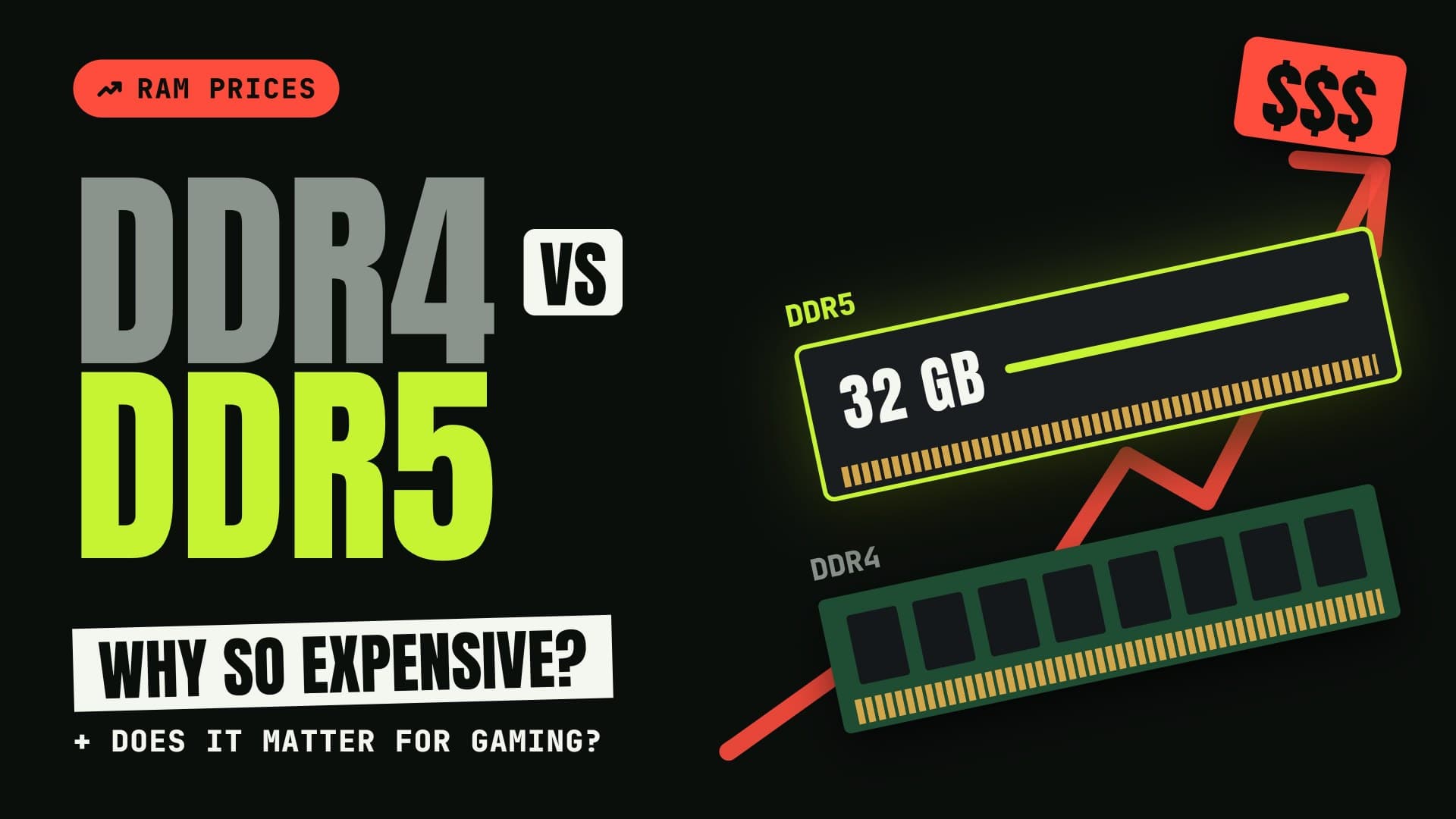
The headline change is speed. Common DDR4 kits run around 3,200 to 3,600 MT/s (megatransfers per second). DDR5 kits usually start at 4,800 and go past 6,000. DDR5 also splits each stick into two smaller channels, runs at a lower voltage, and handles power regulation on the stick itself.
What you can't do is drop DDR5 into a DDR4 board. The notch in the stick sits in a different place, so it won't physically fit.
Why prices went up
Memory makers are moving factory capacity to high-bandwidth memory (HBM) for AI accelerators. That leaves less ordinary DDR4 and DDR5 to go around, and new memory factories take years to build. MSI, citing TrendForce, describes PC memory prices more than doubling in early 2026.
DDR5 has taken the biggest hit because every new platform needs it. PC Gamer currently puts a 32GB DDR5-6000 kit at around $480 in the US, against roughly $210 for 32GB of DDR4-3600. Indian retail prices move around a lot, so check a few stores before you buy.
How much it matters in games
Less than the price gap suggests. MSI's own guide says DDR4 is enough for the large majority of gaming and everyday work. It puts DDR5's edge at a few percent, mostly in memory-heavy tasks. In games, faster RAM tends to show up most when the CPU, not the graphics card, is holding you back, such as at high frame rates in competitive shooters.
On paper, then, a DDR4 PC isn't obsolete. That's part of why Intel's new LGA1700 chips are interesting. For more on how memory feeds a GPU, see our unified memory explainer.
Images: Zerocade.