

The short version
- If you own a regular PS5, not a Pro, your console just picked up AI upscaling. Sony announced QSSR (Quick Spectral Super Resolution) on October 1, 2026.
- Two games got patches the same day: Marvel's Wolverine and Ghost of Yōtei.
- It's a lighter version of the Pro's PSSR, developed through Sony's Project Amethyst partnership with AMD.
- Digital Foundry measured a cost of about 1.5 to 1.8 milliseconds per frame, and called the gains in Wolverine "exceptional".
What is QSSR?
Upscaling means the game renders at a lower resolution and then rebuilds a sharper image for your TV. That frees up power for higher frame rates or heavier effects. AI upscaling uses a trained neural network to do the rebuilding, which usually holds onto fine detail better than older methods. Our PSSR explainer goes deeper into how that works.
The PS5 Pro has had its own version, PSSR, since launch. It was too demanding for the standard PS5's hardware, though, because the base console lacks the Pro's dedicated machine-learning hardware. QSSR is Sony's answer: a lighter take on the same idea, built on what Sony calls "a streamlined neural network architecture" with a "hand-tuned implementation" for the base console.
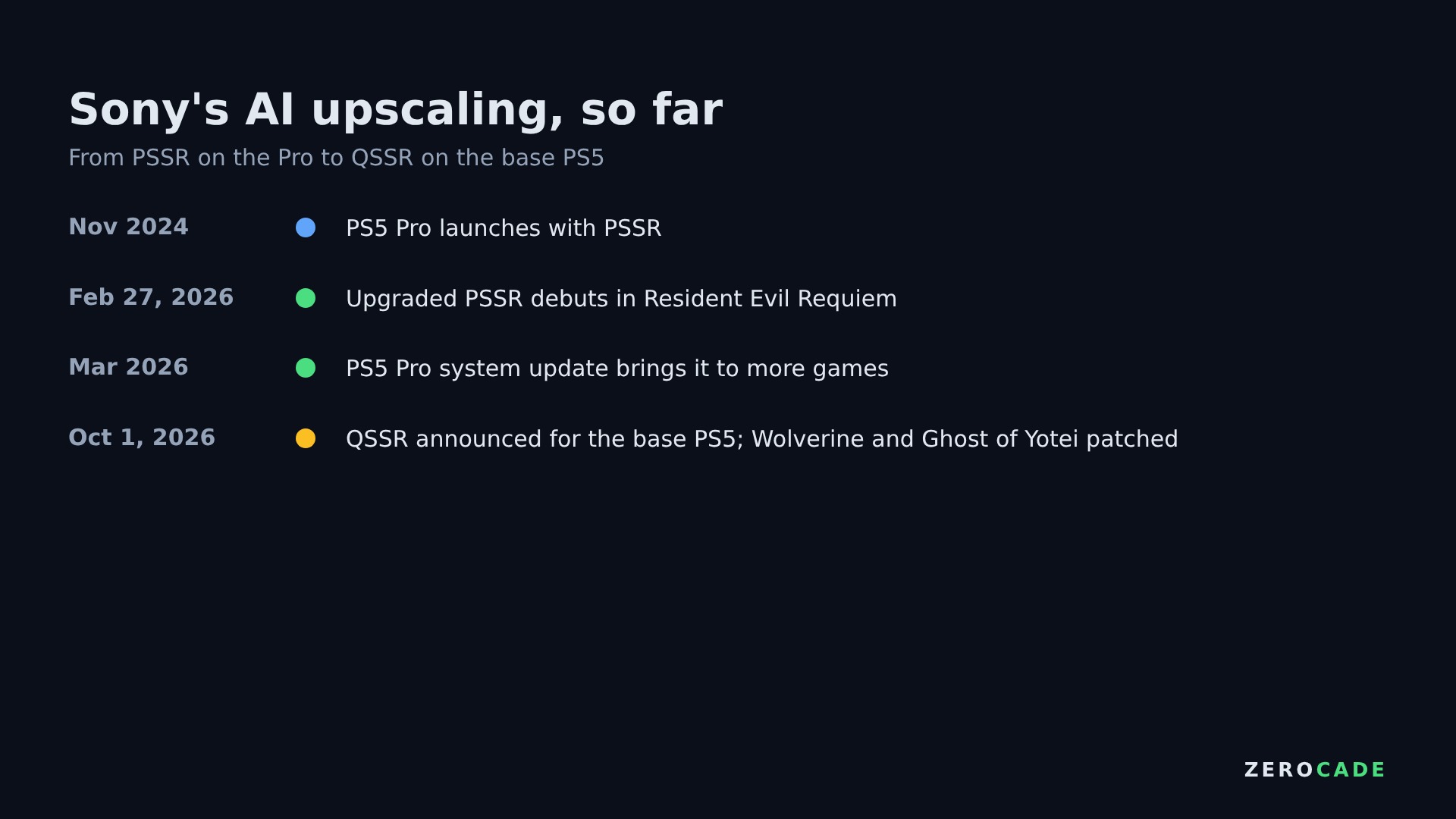 Image: Zerocade
Sony isn't pitching it as a PSSR replacement. In the announcement, Daniel Craig, Principal Engineer in Graphics R&D at Sony Interactive Entertainment, says PSSR "remains the gold standard on PS5 Pro", while QSSR brings "notable improvements to both image detail and image stability on PS5".
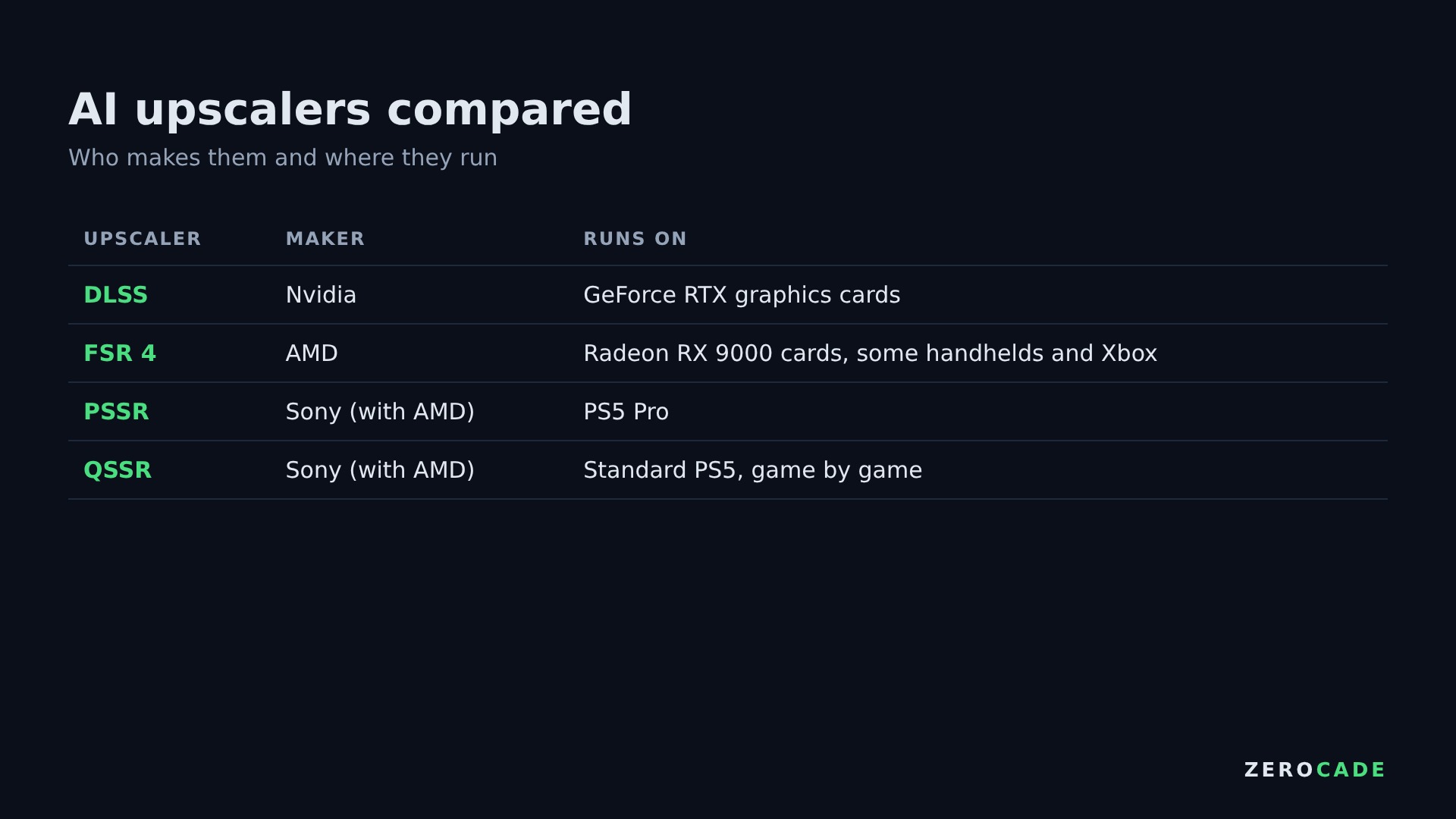 Image: Zerocade
Which games support QSSR?
Right now, two. Both are Sony first-party games, and both were patched on October 1.
Marvel's Wolverine
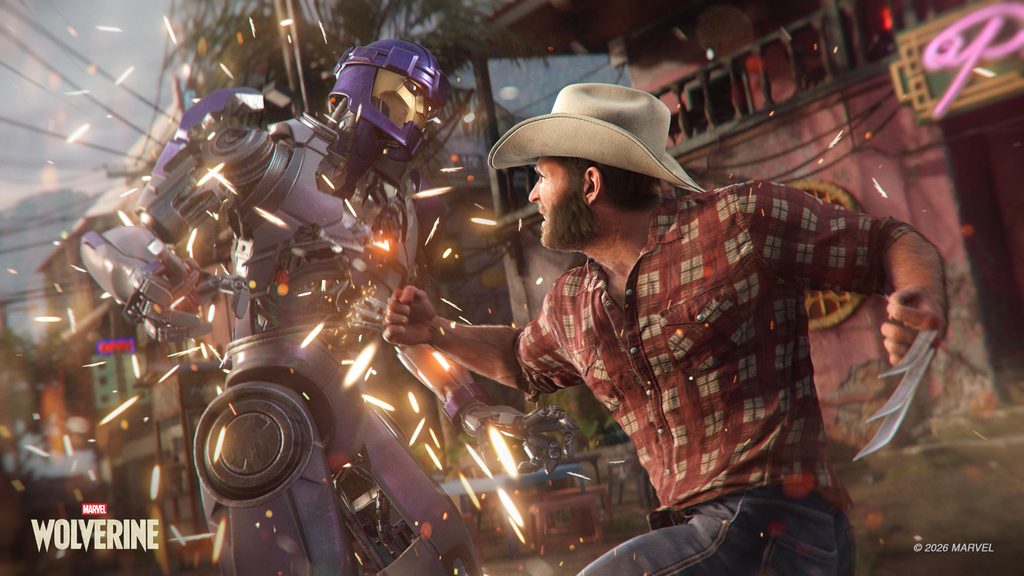 Image: Sony Interactive Entertainment
Insomniac's Wolverine came out on September 15, 2026, so it had QSSR within barely two weeks of launch. Sony says the upscaler sharpens "pixel-level clarity and stability" in locations like Madripoor and Shinjuku, two of the game's busier, neon-heavy settings.
This is where the outside analysis is most positive. Digital Foundry, reported by TechRadar, called the quality boost "exceptional" in Wolverine, pointing to steadier fine detail and cleaner foliage in motion.
Ghost of Yōtei
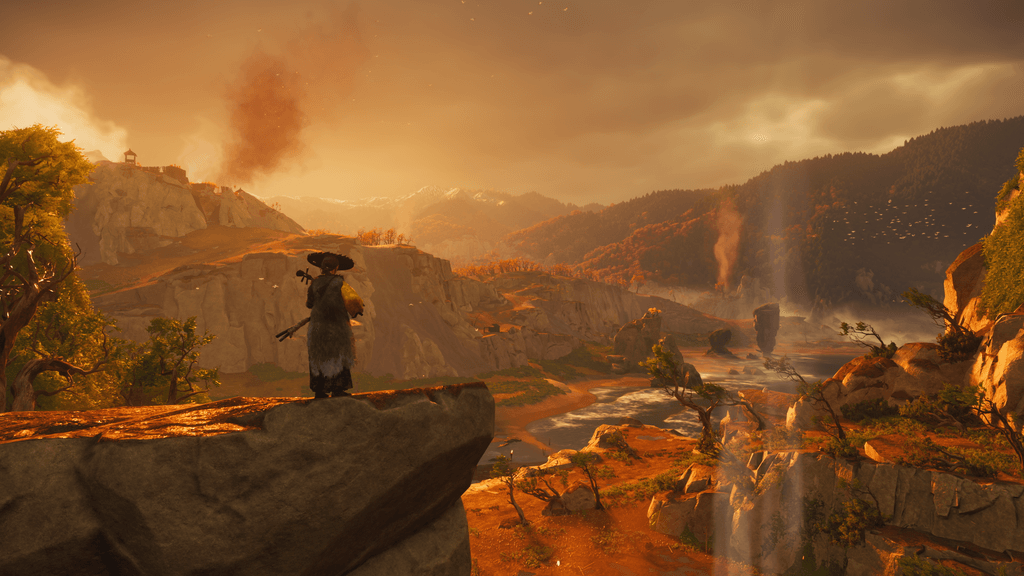 Image: Sony Interactive Entertainment
Sucker Punch's samurai game launched in October 2025 and already had a reputation for clean visuals. Sony says QSSR helps with "resolving fine details in characters and environments" and improves temporal stability, meaning less shimmer and flicker as the camera moves. Digital Foundry's take was that the gains here are "less dramatic". On paper that makes sense: there was less to fix in Ghost of Yōtei to begin with.
Does it cost performance?
A little. According to Digital Foundry, the upscaler itself takes around 1.5 to 1.8 milliseconds per frame, which Richard Leadbetter called "reasonable for an ML-based upscaler". For context, a 60fps game has about 16.7ms to draw each frame, so QSSR uses roughly a tenth of that budget.
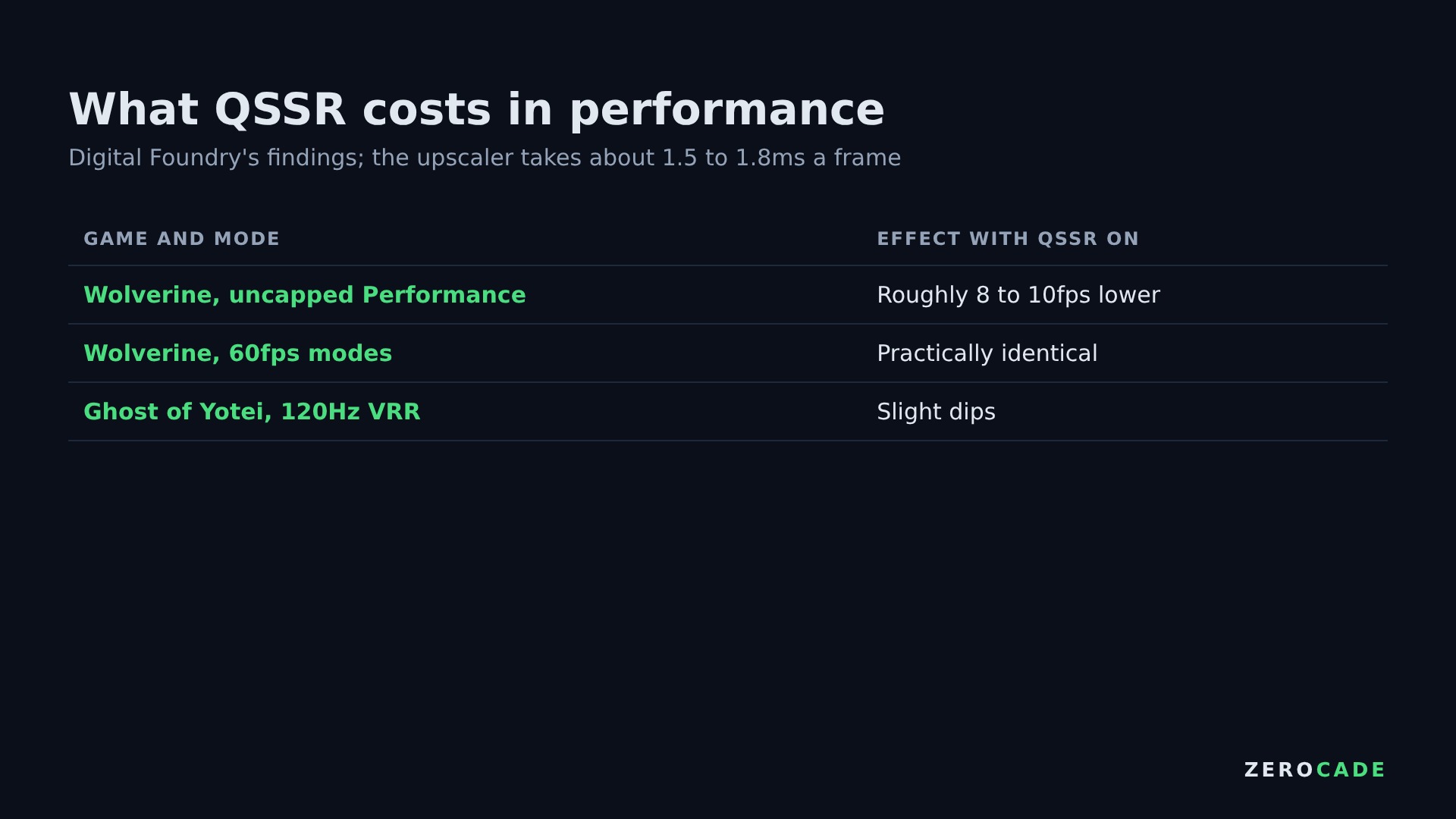 Image: Zerocade
That's why uncapped modes show the hit most. In 60fps modes with dynamic resolution, the game can render a few pixels fewer to make room, and the sharper upscale more than makes up for it.
Which games are next?
Sony hasn't named any. The company says QSSR "will be offered broadly to all PlayStation developers", so support is up to each studio, game by game. Sony's own studios are the obvious first candidates, and with GTA 6 arriving on November 19, it would be the biggest possible showcase, though Rockstar hasn't said anything about it.
Frequently asked questions
Do I need a PS5 Pro for QSSR? No. QSSR is built for the standard PS5, including the Slim. The Pro keeps using PSSR.
Is QSSR a system-wide setting? No. It works per game, so a title has to be patched to support it. The patches add their own settings to toggle it.
How do I get it? Install the latest update for Marvel's Wolverine or Ghost of Yōtei, then check the game's graphics settings.