
The short version
- Thermal throttling is when a chip lowers its own speed because it's getting too hot.
- It's a safety feature, not a fault. It stops the chip from damaging itself.
- It matters most in long, heavy tasks like gaming, where the slowdown shows up as dropping frame rates.
- It's in the news because a report says the 5 GHz Snapdragon in early Galaxy S27 Ultra tests kept hitting its heat limit.
Why chips get hot
A processor turns electricity into work, and a lot of that energy ends up as heat. The faster it runs, the more power it uses and the hotter it gets.
Every chip has a safe temperature limit. Go past it for too long and the chip can become unstable or wear out faster.
What throttling actually does
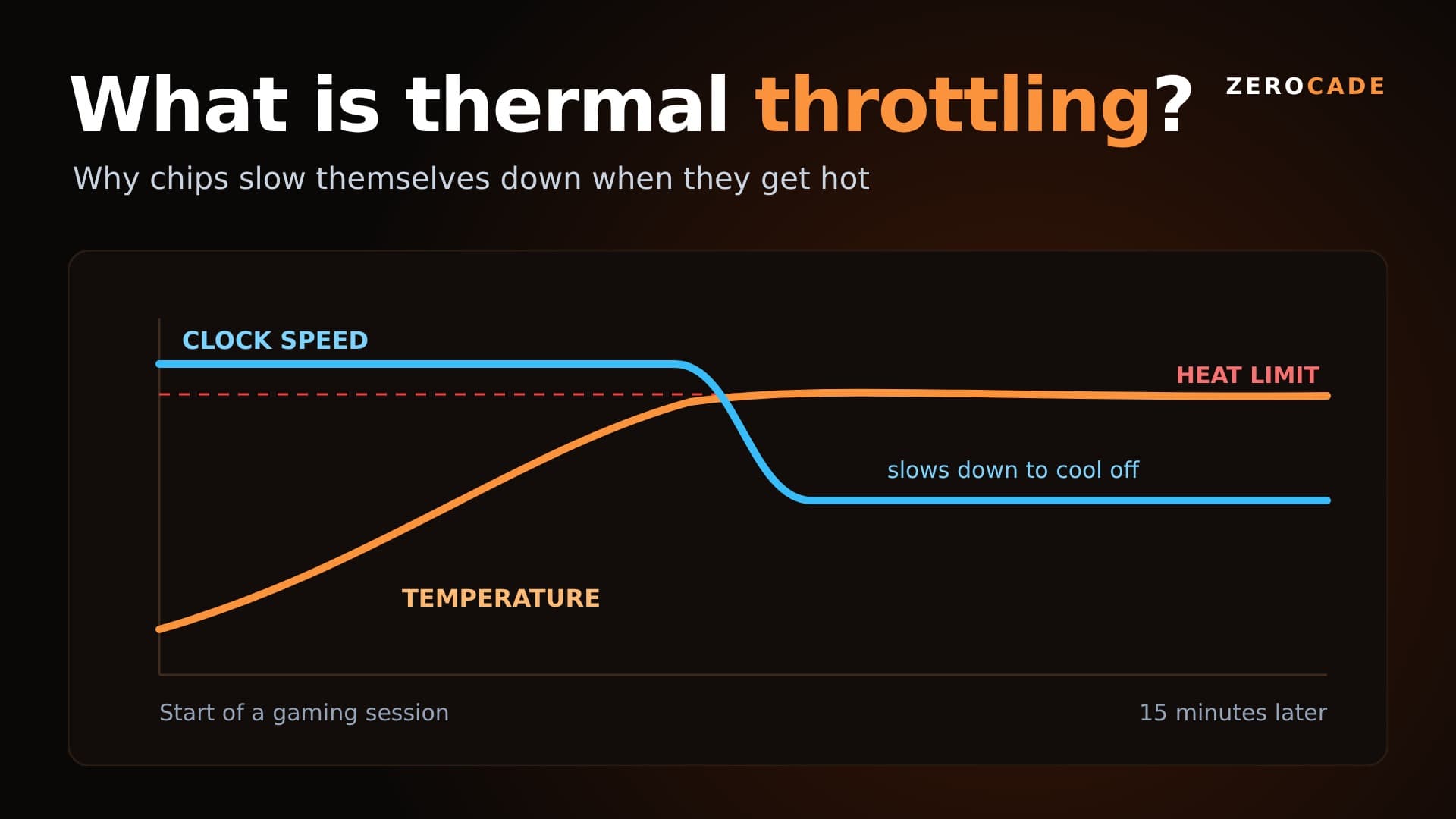
When a chip gets close to that limit, it lowers its clock speed and voltage. Less power means less heat, so the temperature settles. Once it cools down, the speed goes back up.
That's why a phone can post a great benchmark score in a 30-second test and then slow down 15 minutes into a game. The first number shows its peak. The second shows what it can sustain.
Why phones throttle more than PCs
A desktop PC has big heatsinks and fans moving air through the case. A gaming laptop has fans too, but less room. A phone usually has no fan at all. It relies on a vapour chamber or graphite sheets to spread heat into the frame.
So the same kind of chip can hold its speed much longer in a PC than in a thin phone. Hot weather makes it worse, which matters in much of India, where summer room temperatures can easily pass 35°C.
What it means when you're buying
Peak speed numbers like "5 GHz" tell you what a chip can do for a short burst. For gaming, sustained performance matters more. Look for long-run stress tests in reviews, not just one benchmark score.
Our Galaxy S27 Ultra report covers the latest example. Our Snapdragon 8 Elite Gen 6 vs Extreme Gen 6 explainer explains the chip involved.
What to watch: sustained performance tests of the first Snapdragon 8 Elite Extreme Gen 6 phones sold in India.