
The short version
- Sell-in means consoles or games shipped from the maker to shops. Sell-through means units actually bought by players.
- Nintendo and Sony report sell-in in their earnings. Nintendo's 26.35 million Switch 2 figure, announced on November 5, is units shipped.
- Market trackers like Circana in the US and Famitsu in Japan measure sell-through, using data from shops.
- The two numbers are usually close over a console's life, but they can drift apart by millions in any one quarter.
Two moments, two numbers
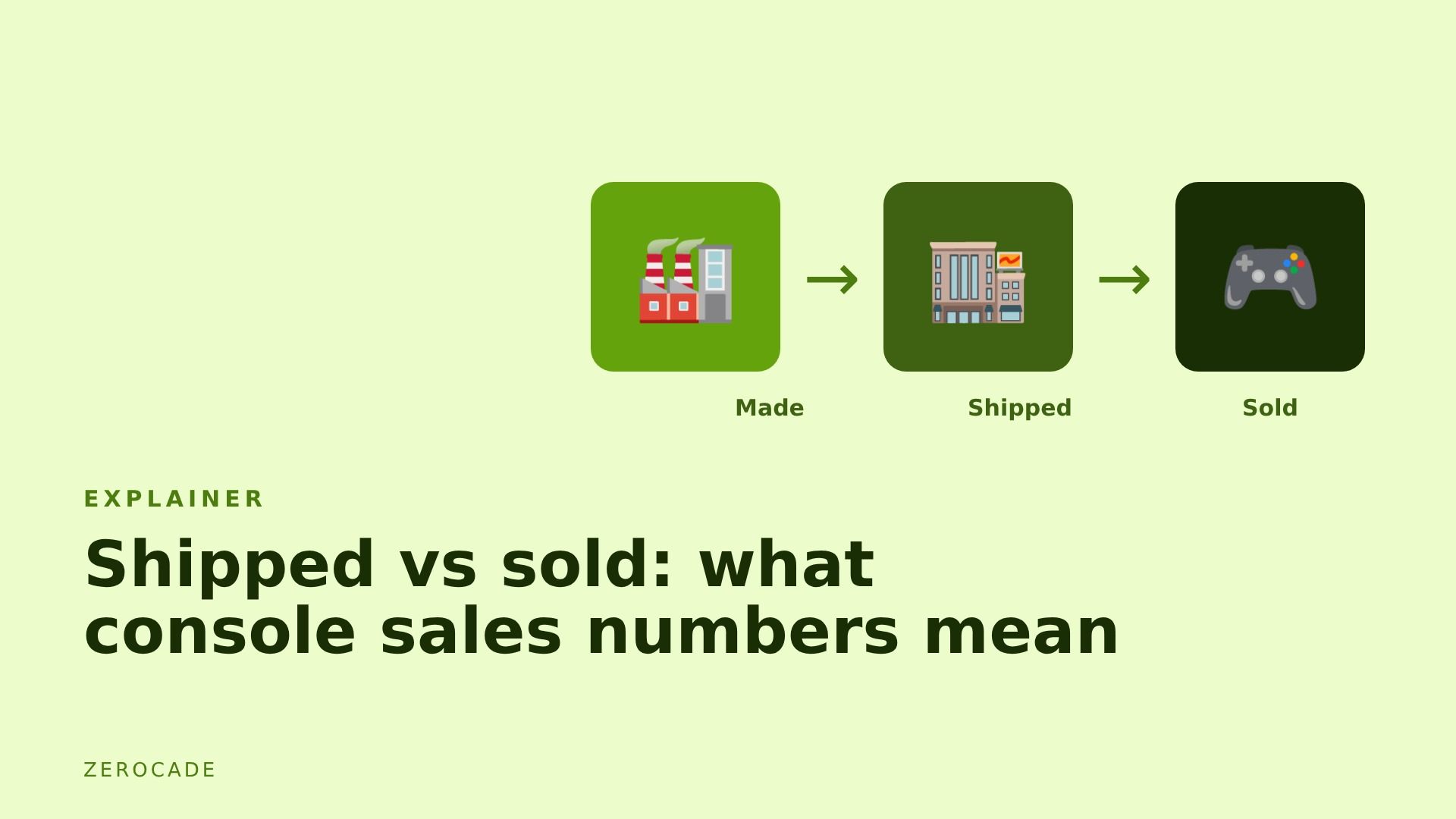
A console goes on a journey before it reaches your TV. It's built in a factory, shipped to a shop or a distributor, sits on a shelf or in a warehouse, and then someone buys it. Sales figures can be counted at two different points on that journey.
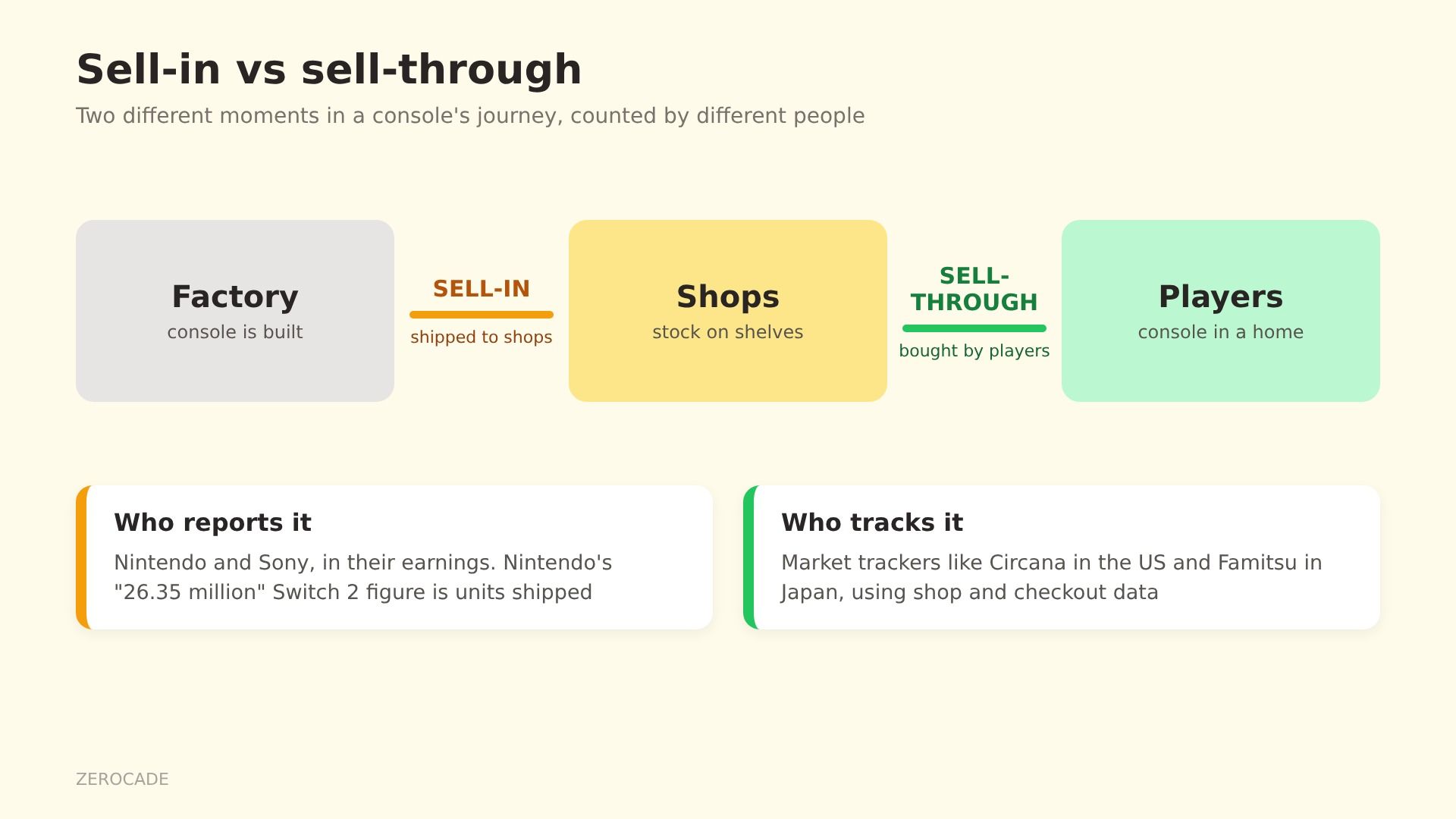
Image: Zerocade
Sell-in is the first number. It counts units the company has shipped and been paid for, or will be paid for, by retailers. That's what a company records as revenue, which is why it's the number that shows up in earnings reports.
Sell-through is the second. It counts units that have left the shop in a customer's hands. That's the number that tells you how many people actually own the console.
Who reports what
Nintendo reports shipments. Every quarter it publishes how many consoles and games it shipped, and it keeps a running total. When it said on November 5 that the Switch 2 had reached 26.35 million, that meant 26.35 million consoles shipped by September 30, 2026. It added that it shipped 6.49 million in April to September, which we break down in our Nintendo results post.
Sony also reports shipments for the PS5 in its quarterly results, alongside player numbers like monthly active users.
Microsoft stopped publishing Xbox console numbers years ago. It reports hardware revenue as a percentage change instead, which makes direct comparisons much harder.
Valve doesn't publish Steam Deck sales at all. Most figures you see for it are estimates.
On the sell-through side, Circana (formerly NPD) tracks sales at US retailers, Famitsu publishes weekly sales charts in Japan, and GfK covers parts of Europe. These are independent firms using checkout data from shops, so they don't always cover every store or every country.
Why the gap matters
Over a whole console generation, the two numbers end up close, because nearly every console shipped eventually gets sold. In a single quarter, though, they can be quite different.
- Before a big season, companies ship heavily so shops are stocked. Shipments in September often run well ahead of sales, because retailers are filling shelves for the holidays.
- At launch, shipments can lead by a lot. Consoles sit in warehouses and on ships before they reach buyers.
- When demand slows, shipments drop faster than sales, because shops already have stock and stop ordering.
That last point is useful for reading Nintendo's latest results. Switch 2 shipments in April to September fell roughly 38% from a year earlier. Some of that is fewer people buying, and some is simply shops not needing as much new stock after the launch rush.
Games work the same way. Nintendo's 16.48 million for Mario Kart World includes copies bundled with consoles that shipped, whether or not every one of those consoles has sold yet.
How to read the next headline
When you see a console sales number, ask three questions.
- Is it shipped or sold? A company's own figure is almost always shipped. A tracker's figure is usually sold.
- Which region? Circana covers the US only, Famitsu covers Japan only. A "best-selling console" in one chart may not be the best-seller worldwide.
- Is it an estimate? Figures for devices like the Steam Deck, or for Xbox consoles, are usually guesses from analysts, not company data.
Unofficial trackers, like the one behind the recent claim that AMD outsold Nvidia in graphics cards on Amazon US, add a fourth question: who collected the data, and how?
For India, there's an extra wrinkle. Nintendo doesn't officially sell the Switch 2 here, and Sony doesn't publish India-only PS5 numbers, so there's no reliable public figure for how many consoles Indian players own. Any India console sales number you see is an estimate.
Next time a company announces a milestone, check whether it says "shipped" or "sold." It's usually the first.