

The short version
- About 20 former id Software developers, laid off in Xbox's July cuts, have formed Hidden Horses, an employee-owned studio in Texas.
- Its first game is Danger Pay, a single-player arena shooter set on a deadly game show, inspired by The Running Man and Smash TV. A Kickstarter is "launching soon".
- Employee ownership means the people making the games own the company and share its decisions and profits, rather than a publisher or investors.
- It can work brilliantly, as with Dead Cells maker Motion Twin, but it doesn't solve funding, as Montreal co-op KO_OP found this year.
What happened at id Software
On July 6, Xbox CEO Asha Sharma announced plans to cut about 3,200 roles over the year, saying the business was "not healthy". id Software, the studio behind Doom, was hit hard. A Texas state filing listed 136 roles cut there, roughly half the team by most reports, a day before Doom: The Dark Ages' Revelations DLC came out.
Doom: The Dark Ages itself costs ₹3,499 on Steam and the PS Store in India, or ₹4,899 for the Premium Edition.

Image: id Software / Bethesda
What Hidden Horses is
Hidden Horses announced itself in a press release dated November 11, and VGC reported it on November 12. The studio is based in the Dallas-Fort Worth area and says its founders have over 250 years of combined experience. Its co-founders include engine programmer Dustin Land, executive producer Andrew Willis and tools programmer Johnmichael Quinlan.
It describes itself as employee-owned, combining "shared ownership and democratic governance with clear creative leadership". Willis said the people who make games should own a stake in what they build. Land said the point was keeping the team together.
Danger Pay is the first project. What's known so far:
- A single-player, arena-based first-person shooter on a lethal TV game show.
- Inspired by the 1987 film The Running Man and the arcade game Smash TV.
- No platforms, engine, release window or footage yet.
- Funding will come from Kickstarter. The page has no goal set yet; the money is for startup costs, licences, hardware and healthcare, and development starts once it's funded.
The studio hasn't published its exact legal structure or how ownership and pay are split.
What "employee-owned" actually means
There's no single model. These are the main ones:
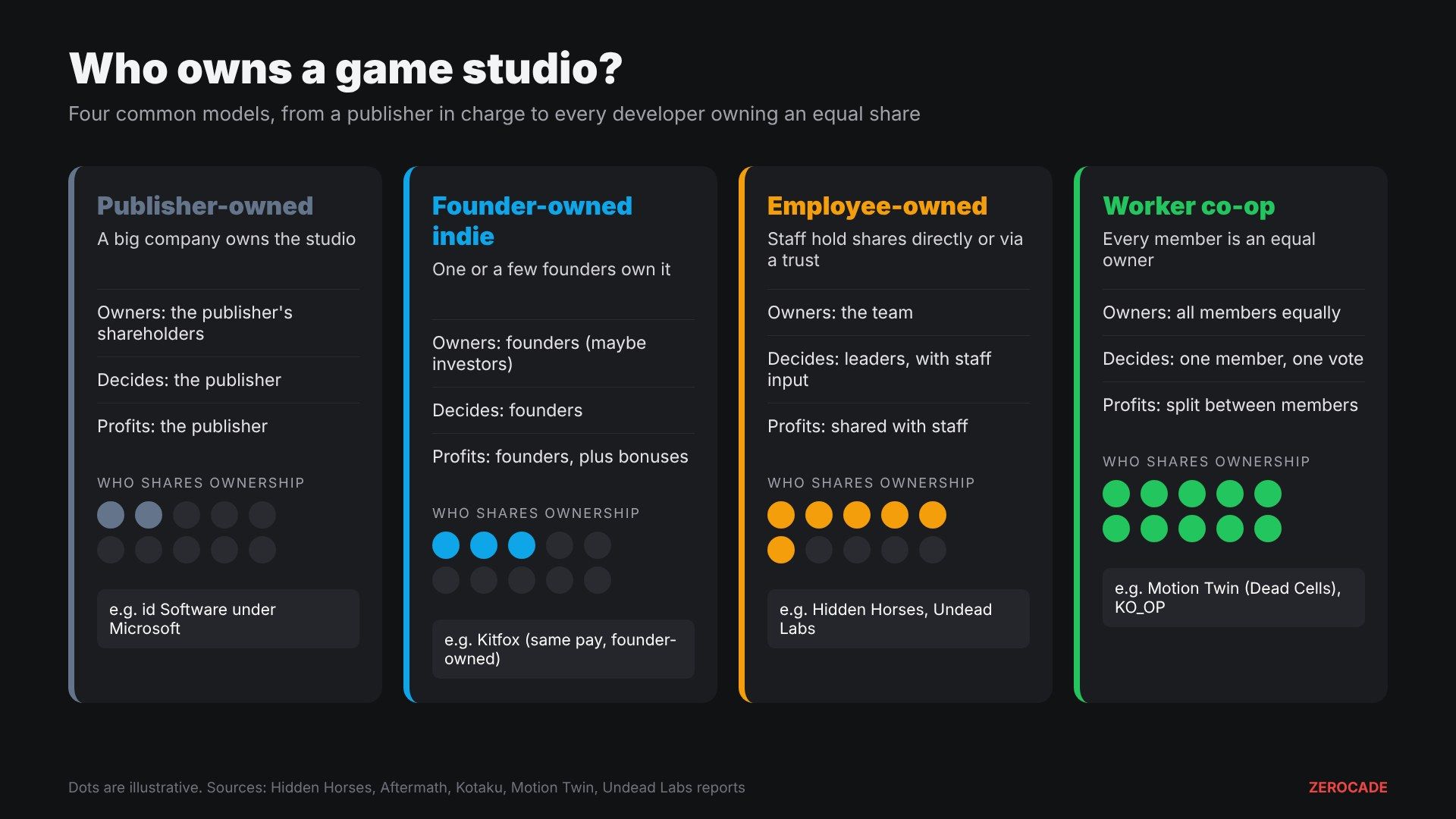
Image: Zerocade
- Publisher-owned: a big company like Microsoft owns the studio. It funds the games and takes the profits, and can close the studio or cut staff, as with id.
- Founder-owned indie: one or a few founders own it, even if they treat staff well. Kitfox, for example, has paid everyone the same hourly rate, but it isn't owned by them.
- Employee-owned: staff hold shares in the company, directly or through a trust, so they share in profits. Leadership can still make day-to-day calls.
- Worker co-op: every member owns an equal share and gets an equal vote. Big decisions, like budgets, hiring and even pay, are voted on.
In the UK, companies can also move into an employee ownership trust, where a trust holds at least 51% of the shares on behalf of staff, and the company buys the founders out from future profits.
When it works: Motion Twin
Motion Twin, in Bordeaux, France, became a worker co-op in 2004. Its roughly eight members get equal pay and an equal vote.
That tiny co-op made Dead Cells, which entered early access in 2017, launched fully in 2018 and passed 10 million sales by June 2023. It's ₹629 on Steam India. To keep supporting it without growing the co-op, Motion Twin spun off a separate company, Evil Empire, in 2019. Motion Twin then made Windblown, which sold 250,000 copies in its first two months of early access.
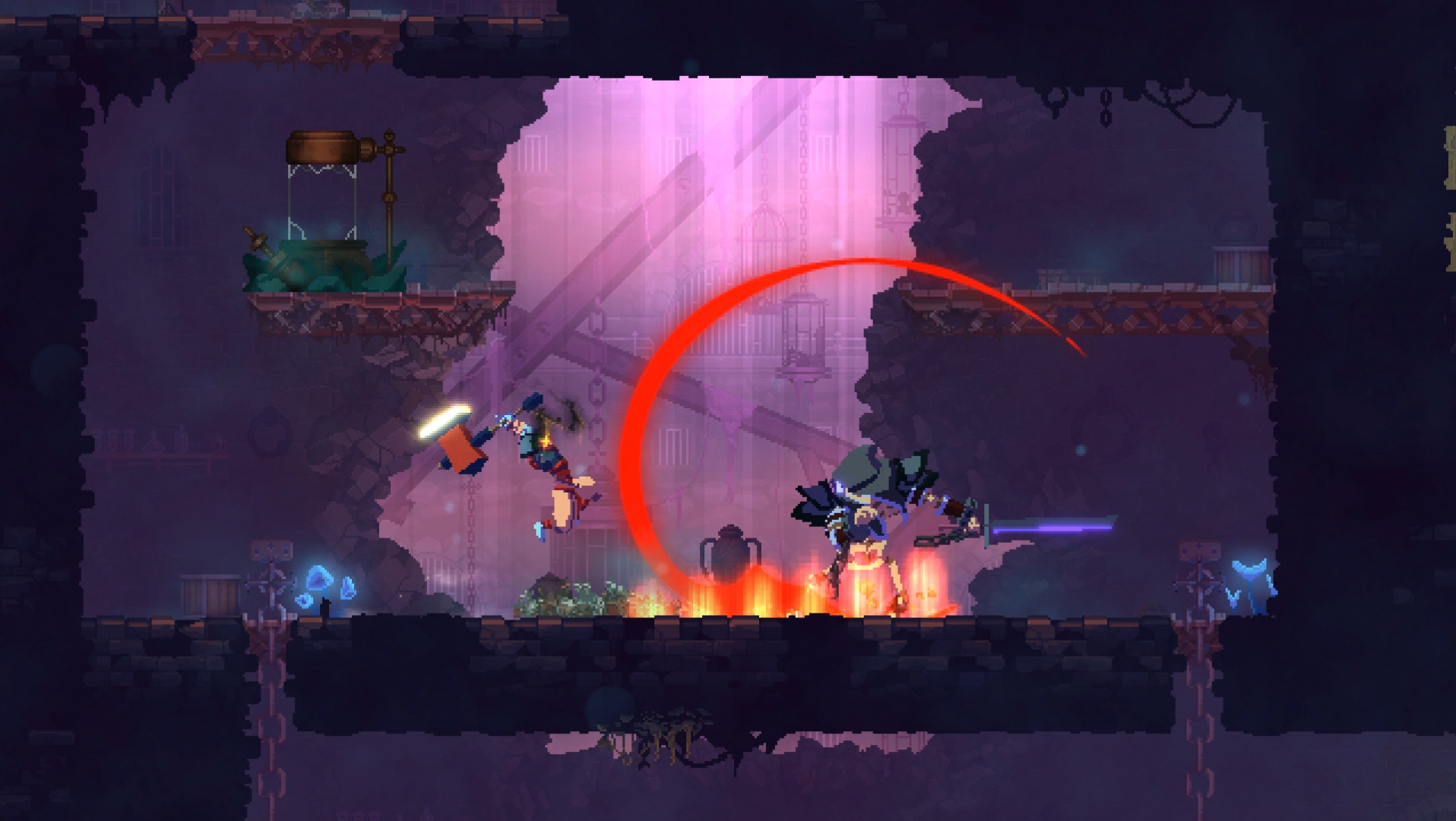
Image: Motion Twin
When it struggles: KO_OP
Montreal's KO_OP, maker of Goodbye Volcano High and Young Suns, runs as a co-op where everyone earns the same salary and members vote every two months, according to Aftermath.
In September, with about six months of money left after funding fell through, members voted to furlough 13 people rather than run the studio until it closed. Furloughed members keep their vote and their share of Young Suns profits.
That's the honest catch. Shared ownership changes who decides and who benefits. It doesn't make games cheaper to make, and it can make outside funding harder, since investors usually want control.
Why more developers are trying it
The GDC's 2026 State of the Industry survey found 28% of developers had been laid off in the past two years, rising to 33% in the US, and 2026 layoffs have already passed 2025's total. Several new studios this year have tried new structures:
- Raze and Rebuild Studio, a co-op of industry veterans and accessibility experts, launched in August.
- Summer Eternal, made up of former ZA/UM staff, is giving 5% of its profits to a players' non-profit.
- Undead Labs, maker of State of Decay, left Xbox in September as an employee-owned company, though it made layoffs the same day.
On paper, Hidden Horses has two big advantages: a team that has already shipped together, and a genre, fast arena shooters, it's famous for. Its biggest test is the Kickstarter.
What to watch
Watch for Danger Pay's Kickstarter going live, with its funding goal and platforms. That will show whether fans will pay up front to keep a laid-off team together.