
The short version
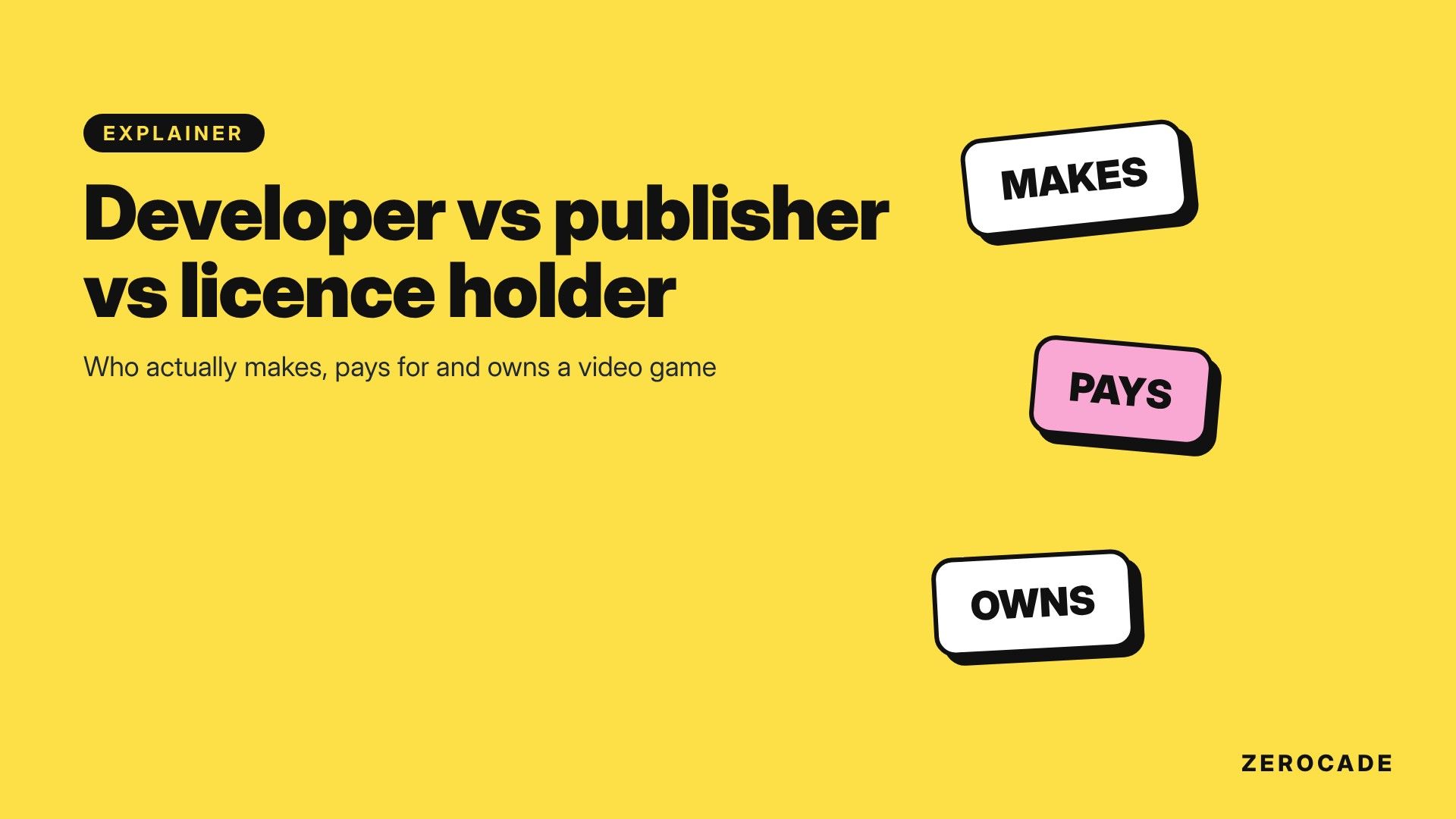
- The developer is the studio that builds the game: code, art, design, sound.
- The publisher pays for it, markets it, sells it, and usually gets the final say on dates and money.
- A licence holder owns a brand like Star Wars and rents it out, with approval rights over how it's used.
- The platform holder, such as Sony, Microsoft, Nintendo or Valve, runs the store and takes a cut of each sale.
One game, four names
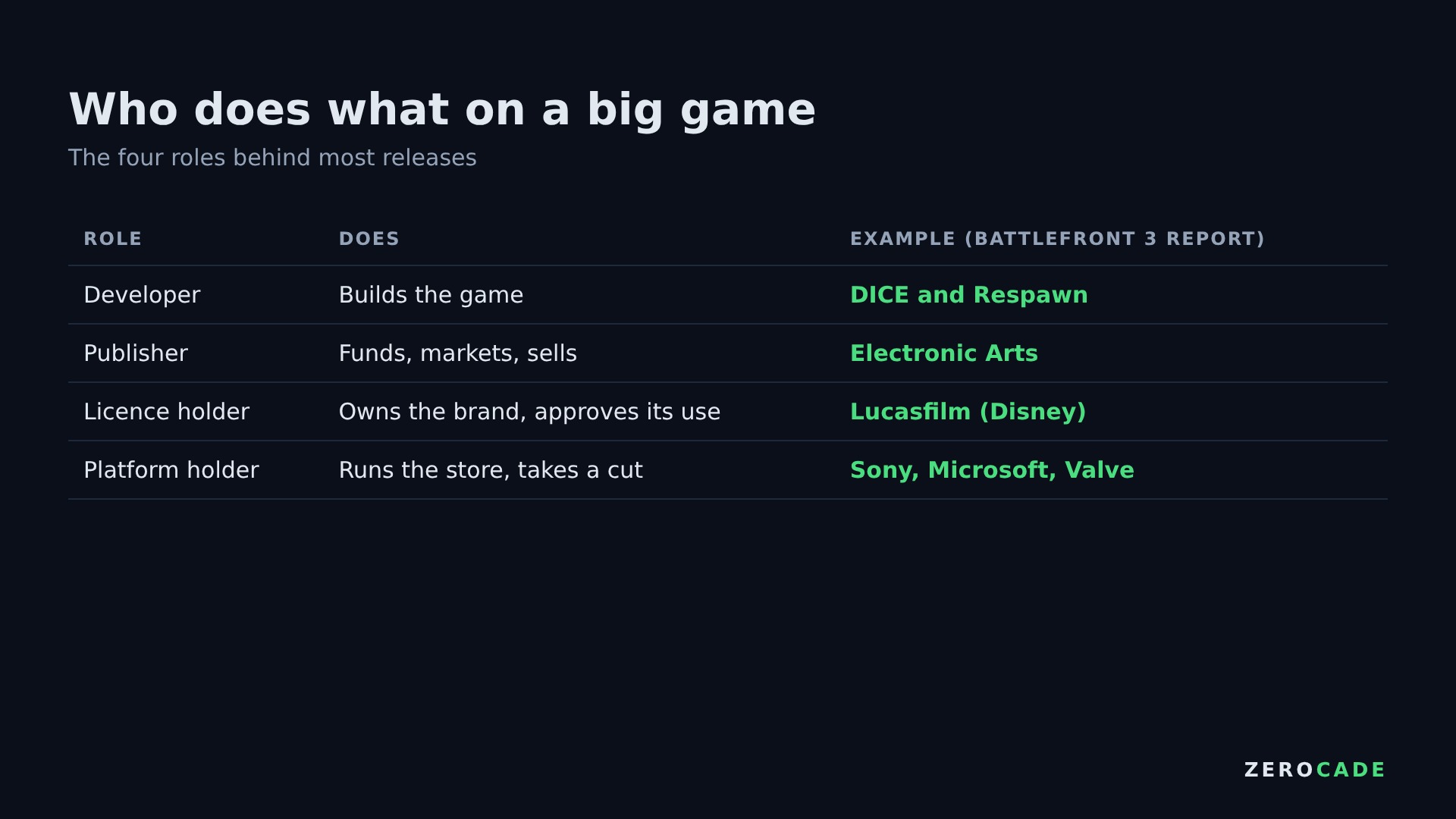 Image: Zerocade
The reported Star Wars: Battlefront 3 is a good example. DICE and Respawn would be the developers. EA would be the publisher. Lucasfilm, owned by Disney, is the licence holder. And when you buy it on a PS5, Sony gets its share as the platform holder.
That's why a single announcement can come with four logos.
What a developer does
Developers make the game itself: programmers, artists, designers, writers, testers and audio teams. On a big game that's hundreds of people, often spread across several studios, with outside support studios handling art, porting or testing. (Our post on game work moving to India covers how much of that support work happens here.)
A developer can be owned by its publisher, as DICE and Respawn are owned by EA, or it can be independent and sign a deal for one project. Owned studios share in success, but they can also be shut down when the parent company cuts costs. That's what happened to BioWare, and what's reportedly threatening Arkane Lyon.
What a publisher does
Publishers take on the financial risk. They fund development, often for four or five years before any money comes back. They also handle marketing, age ratings, translations, platform certification and getting the game into stores. In return they usually own the game, or most of its profit, and they set the deadlines.
For an independent developer, a publishing deal usually works like this: the publisher pays development costs in milestones, then recoups that money from sales before the developer sees a share. That's why a studio can make a hit and still not get rich from it.
Who owns whom
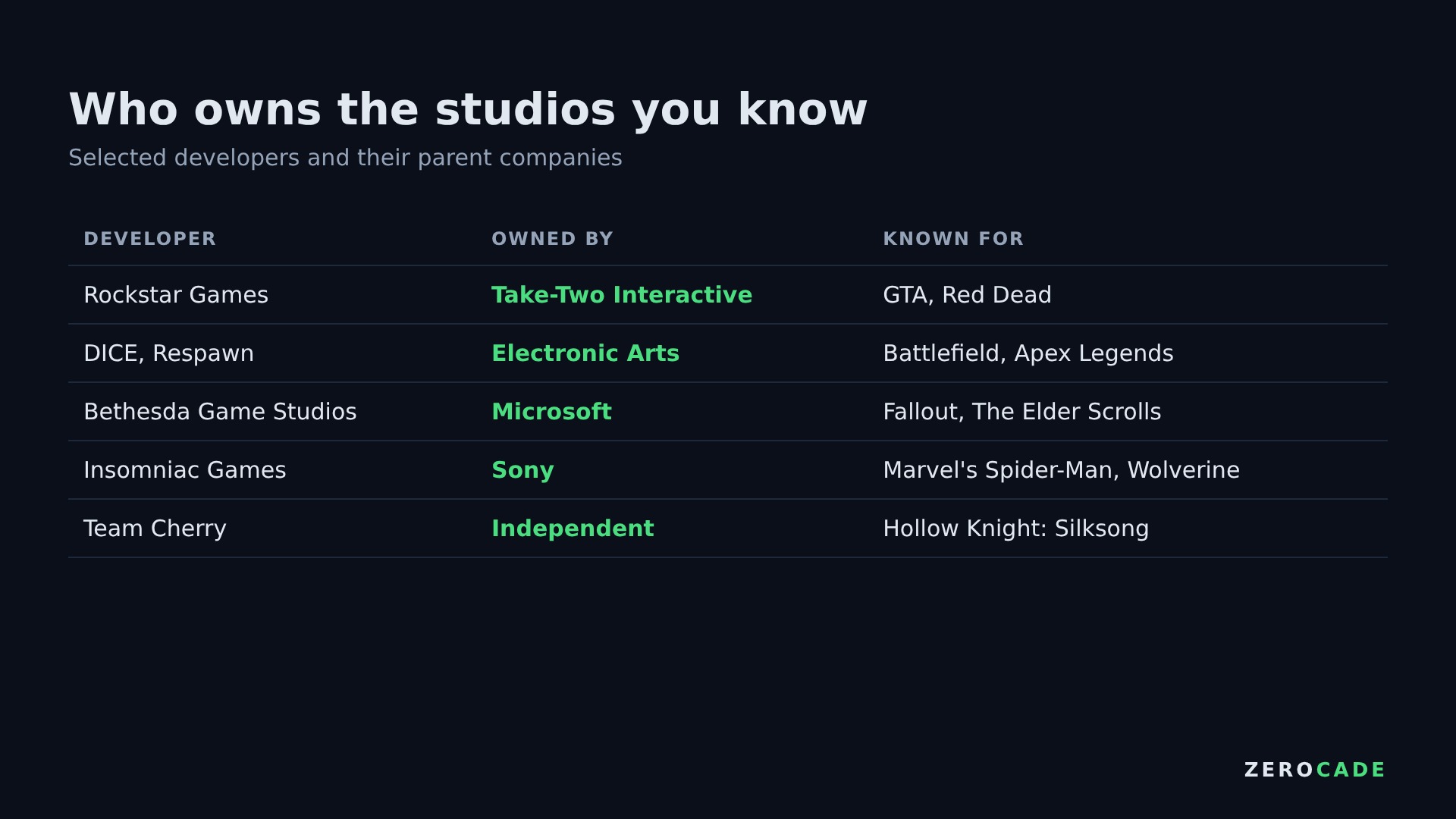 Image: Zerocade
Some studios do both jobs. Rockstar develops GTA 6, while its parent Take-Two owns it. Team Cherry self-published Hollow Knight: Silksong with no outside publisher at all. And the line moves with every acquisition: Microsoft's purchases of ZeniMax and Activision Blizzard made it the owner of Bethesda, id Software and Call of Duty's studios.
What a licence holder does
A licence is permission to use a brand you don't own. Lucasfilm signs deals with publishers, approves story and character choices, and takes a fee or a share. EA held exclusive rights to Star Wars games for years. That deal later opened up, which is how Ubisoft got to make Star Wars Outlaws.
Licences also expire. That's why racing games with real cars and music, such as Forza Horizon 3, get delisted years after launch, and why some of them can't be claimed through Xbox's Disc to Digital programme.
It works the other way too. The Xbox and Netflix talks were about Microsoft licensing its own game worlds out to TV and film.
What a platform holder does
Sony, Microsoft, Nintendo and Valve run the stores where games are sold, and usually take around 30% of each digital sale. They also certify that a game meets their technical rules before it can launch, and they sometimes pay for exclusivity or marketing deals. Our consoles sold at a loss explainer shows why that store cut matters so much to them.
Why it matters to you
When a game slips, gets cancelled or loses features, the reason often sits above the developer. A delay might be the publisher protecting a holiday release window. A missing character might be a licence issue. A store pulling a game might be a platform-holder rule.
Knowing who's who makes the next round of news easier to read. Look at whose name is on the announcement, because that's usually who made the call.