
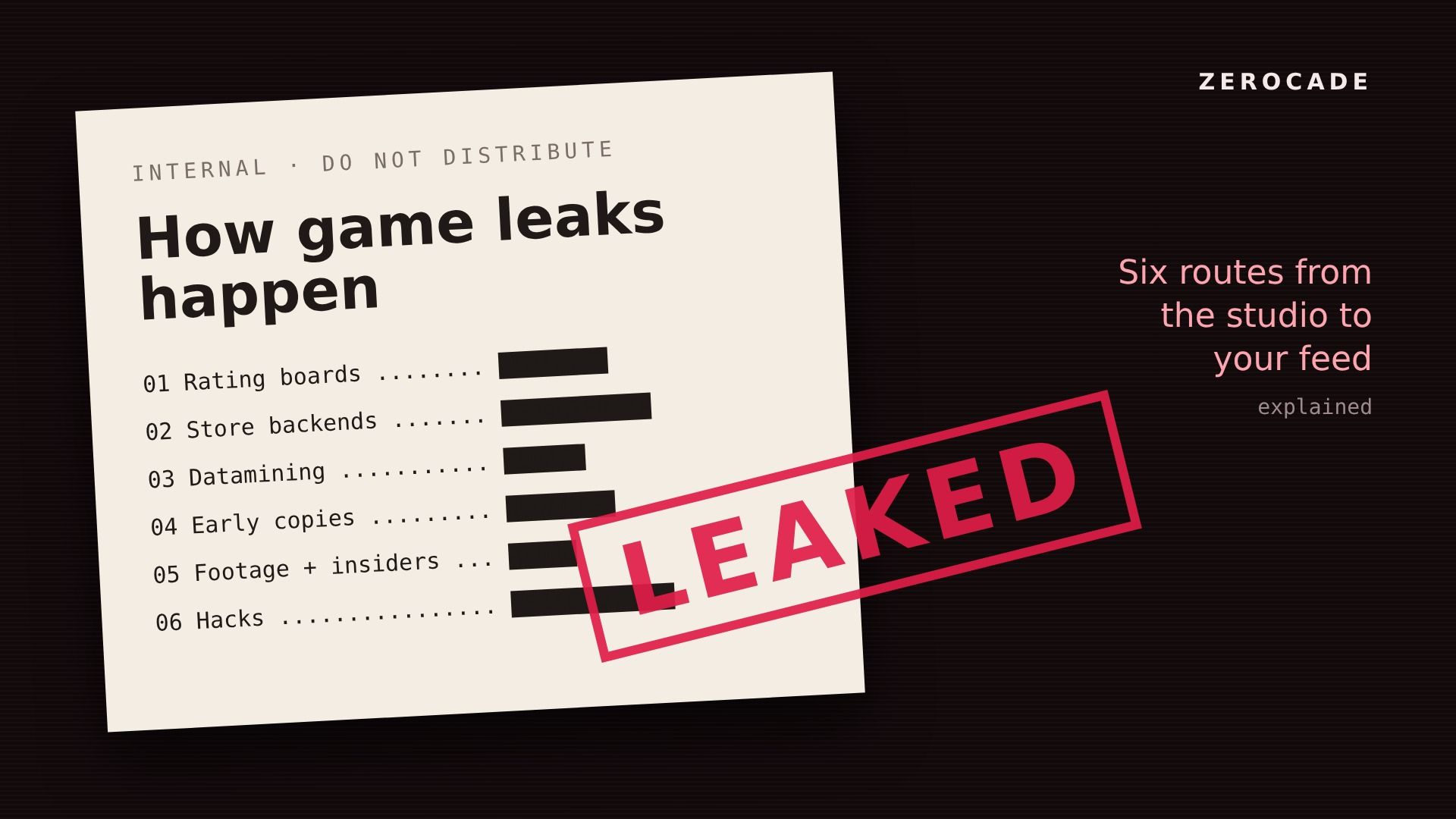
The short version
- A game passes through dozens of hands before launch: rating boards, platform stores, marketing agencies, factories, shops and reviewers. Each one is a place it can leak.
- The most common leaks are paperwork leaks: an age rating or a store listing appearing early. They're usually accurate but say little.
- Datamining and early retail copies leak real content, often spoilers. Hacks are the rarest and most damaging, and they end up in court.
- Publishers fight back with copyright takedowns, account bans and lawsuits. GTA 6, out on November 19, is the current example of all three.
Why games leak so often
A big game is made by hundreds of people, often across several studios and outsourcing partners. Close to launch, the circle gets much wider. Platform holders need builds to certify. Rating boards need footage. Stores need product pages set up weeks early. Factories press discs and shops receive them before release day. Each step adds people and systems that can slip.
That's why leaks cluster in the last few months before a reveal or a launch. It's also why you can often tell where a leak came from by what it contains.
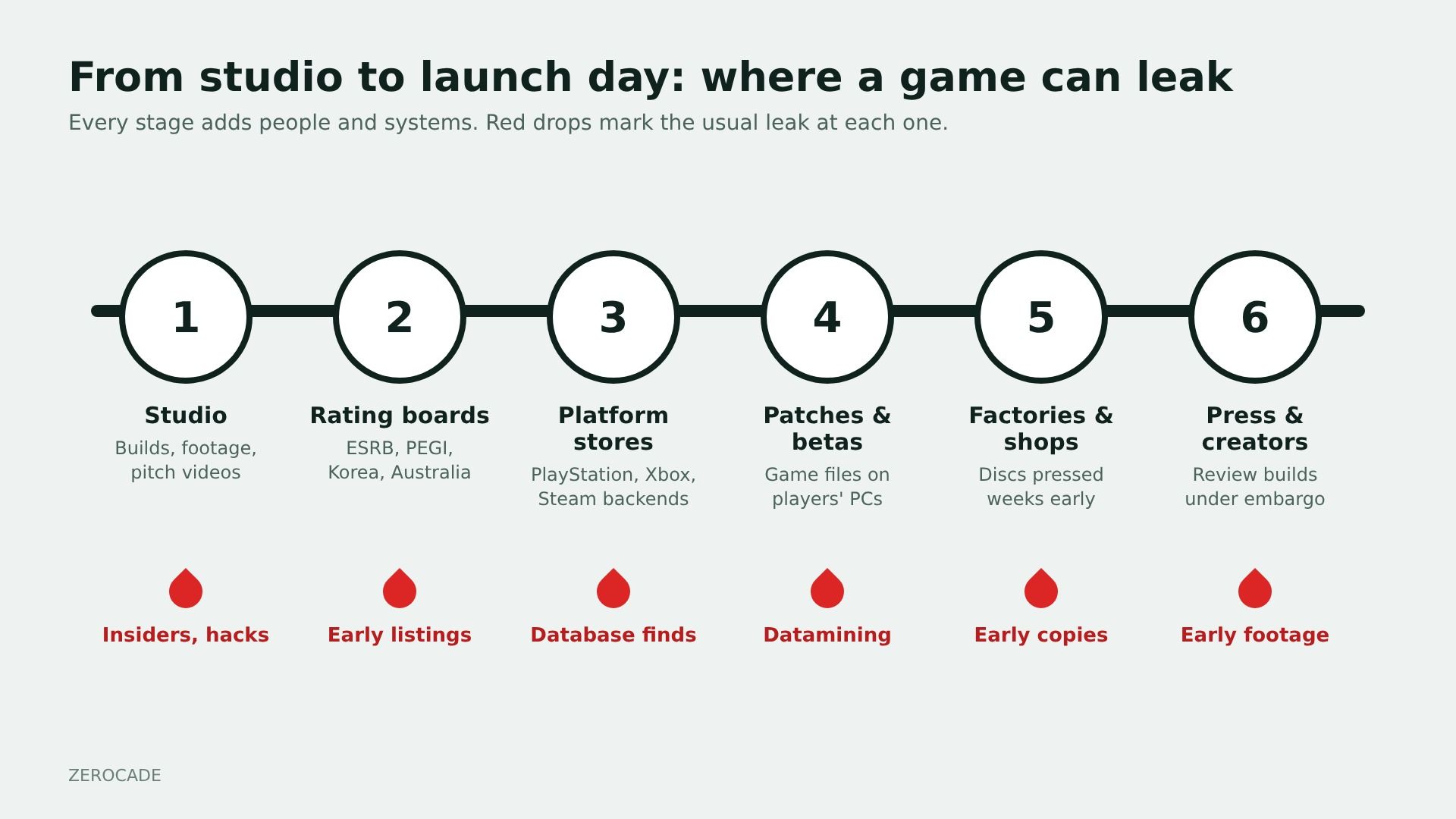
Image: Zerocade
Route 1: rating boards
Every country that sells games needs them rated. The US has the ESRB, Europe has PEGI, and Korea, Australia, Taiwan and Brazil all run their own boards. Some publish listings as soon as a rating is granted, which can be weeks before the publisher's own announcement. Korea's board is famous for this, and it's regularly where ports and remasters first show up.
What it leaks: a title, a platform, sometimes a publisher. How much to trust it: high. It's an official government record, but it says nothing about release dates or features.
Route 2: store backends
Games are added to PlayStation, Xbox, Nintendo and Steam stores well before their pages go public. Fans watch those databases closely. SteamDB tracks every change to Steam's backend, from new app IDs to updated achievement lists. In September, PlayStation Store data leaked GTA 6's PS5 age ratings ahead of launch.
What it leaks: names, dates, prices, file sizes, editions. How much to trust it: high for what's in the listing, but placeholder dates and prices are common.
Route 3: datamining
Once a game or patch is on players' machines, its files are fair game. Dataminers unpack them to find unreleased characters, maps, outfits and story text. Live-service games like Fortnite are mined after almost every update, which is how many collaborations get out before they're revealed.
What it leaks: real content, often spoilers. How much to trust it: high that it's in the files, low that it will ship. Developers leave in cut and placeholder content all the time.
Route 4: early retail copies
Physical games are pressed and shipped weeks early. Sometimes a shop sells them before release day, or a copy goes missing from a warehouse. The Legend of Zelda: Tears of the Kingdom leaked about two weeks before its May 12, 2023 launch this way, and Nintendo spent those weeks issuing takedowns against spoilers online.
What it leaks: the whole game. How much to trust it: completely, which is why it's the route publishers fear most for story-driven games.
Route 5: footage, builds and insiders
This is the messy middle. It covers trailers uploaded early by mistake, footage from playtests, internal pitch videos and people inside studios talking to journalists or leakers. The Persona 1 remake reel that appeared on YouTube on October 31 falls in this group, and so did the Persona 3 Reload leak in April 2023, two months before Atlus revealed the game. Our Persona leak story has the details.
What it leaks: anything from one screenshot to a full build. How much to trust it: varies a lot. AI-generated video now makes fakes easier, so details only the real studio would have, like shared animations, matter more than ever.
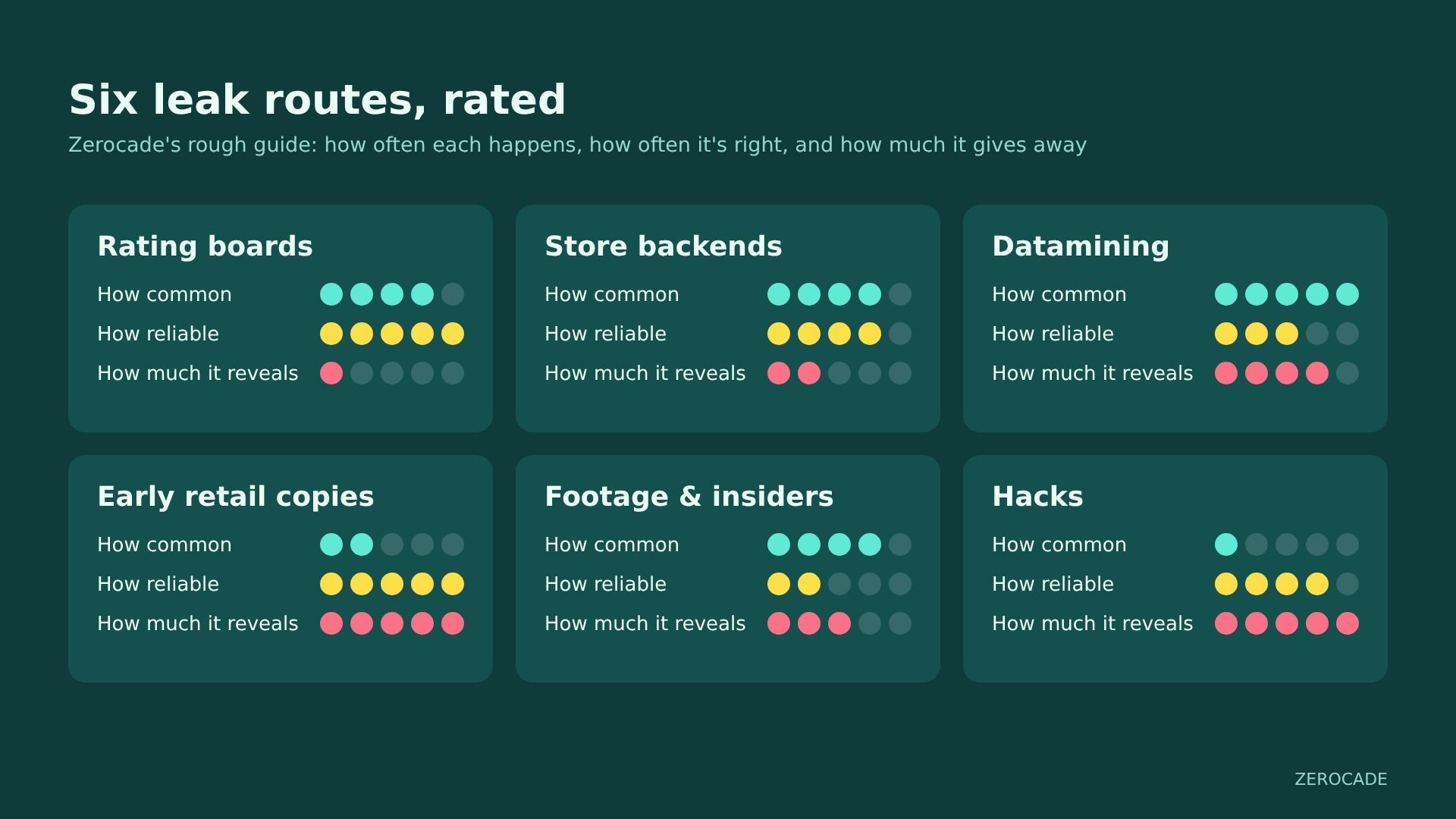
Image: Zerocade
Route 6: hacks
The rarest and most serious. In September 2022, around 90 clips of early GTA 6 footage were posted online after a hacker got into Rockstar's systems. A British teenager linked to the Lapsus$ hacking group was arrested, and a UK court later ordered him to be held in a secure hospital. In December 2023, ransomware group Rhysida leaked well over a million files from Sony's Insomniac Games, including plans for its Wolverine game, after a ransom wasn't paid. Hacks don't only hit games, either: Capcom's account system was breached this autumn, as our Capcom ID breach story explains.
What it leaks: everything, including private staff data. How much to trust it: usually real, and usually a crime.
How publishers fight back
- Copyright takedowns (DMCA notices). These are the fastest tool. When GTA 6 clips from a leaker calling themselves Cyberleek spread in August 2026, Rockstar had posts removed across social media.
- Account bans. A Reddit user claimed on November 3 that their PlayStation account was frozen after a friend sent a leaked GTA 6 clip through PS App messages. That's a single unverified claim, and Sony hasn't commented, but platforms do act on leaked content shared through their services.
- Legal action. Take-Two has asked Discord for user information through subpoenas in its hunt for the GTA 6 leaker, and Nintendo has taken leakers and pirates to court before.
How to read the next leak
Ask where it came from. A rating board listing is almost always right but tells you little. Datamined content is real but may never ship. An anonymous video is the hardest to judge, so look for small, specific details that a faker couldn't easily know, and wait for a takedown or an official reveal before treating it as fact. Our benchmark leak guide applies the same thinking to chip leaks.