

The short version
- Most memory chips are sold under contract prices, negotiated privately between Samsung, SK hynix, Micron and big buyers like PC, phone and console makers. Spot prices are a much smaller, faster-moving market.
- South Korea's KB Securities expects Samsung and SK hynix's average DRAM contract prices to rise about 40% in 2027, with NAND flash, used in SSDs, up about 30%.
- It also says big customers are getting only about 70% of the DRAM they ask for.
- New factories won't add much before 2028. A 32GB DDR5-6000 kit costs about ₹63,000 at one Indian retailer today.
The new forecast
KB Securities published its 2027 outlook on November 20, as reported by SBS. Its numbers:
- DRAM demand up 25% in 2027, led by servers, against supply up just 18%.
- DRAM contract prices at Samsung and SK hynix up about 40% on average.
- NAND contract prices up about 30%, even though NAND demand (+19%) roughly matches supply.
The "70%" figure needs reading carefully. It's a fulfilment rate: major clients are getting around 70% of the DRAM they want, so about 30% of their demand goes unmet. KB also said the memory makers' earnings depend on contract prices rather than spot prices, which have dipped recently. That distinction is what this guide is about.
Step 1: what a contract price is
A company like Dell, Sony or a phone maker doesn't buy memory from a shop. It agrees a price and a volume with a chipmaker, usually every month or quarter, for millions of chips at a time. That deal is the contract price.
These prices aren't public. Research firms such as TrendForce, through its DRAMeXchange arm, survey the market and publish averages. Two recent readings:
- In October 2026, the average contract price for a common PC DRAM chip (DDR4 8Gb) reached $27.50, up 5.77% in a month and an all-time high.
- The same month, a benchmark NAND chip held flat at $30.61, ending 21 straight monthly rises.
TrendForce's quarterly forecasts show how steep the climb has been:
| Quarter | Standard DRAM | NAND flash |
|---|---|---|
| Q3 2026 | +13-18% | +10-15% |
| Q4 2026 | +10-15% | +15-20% |
Earlier in the year it was far worse: TrendForce put the first-quarter jump at about 95%.
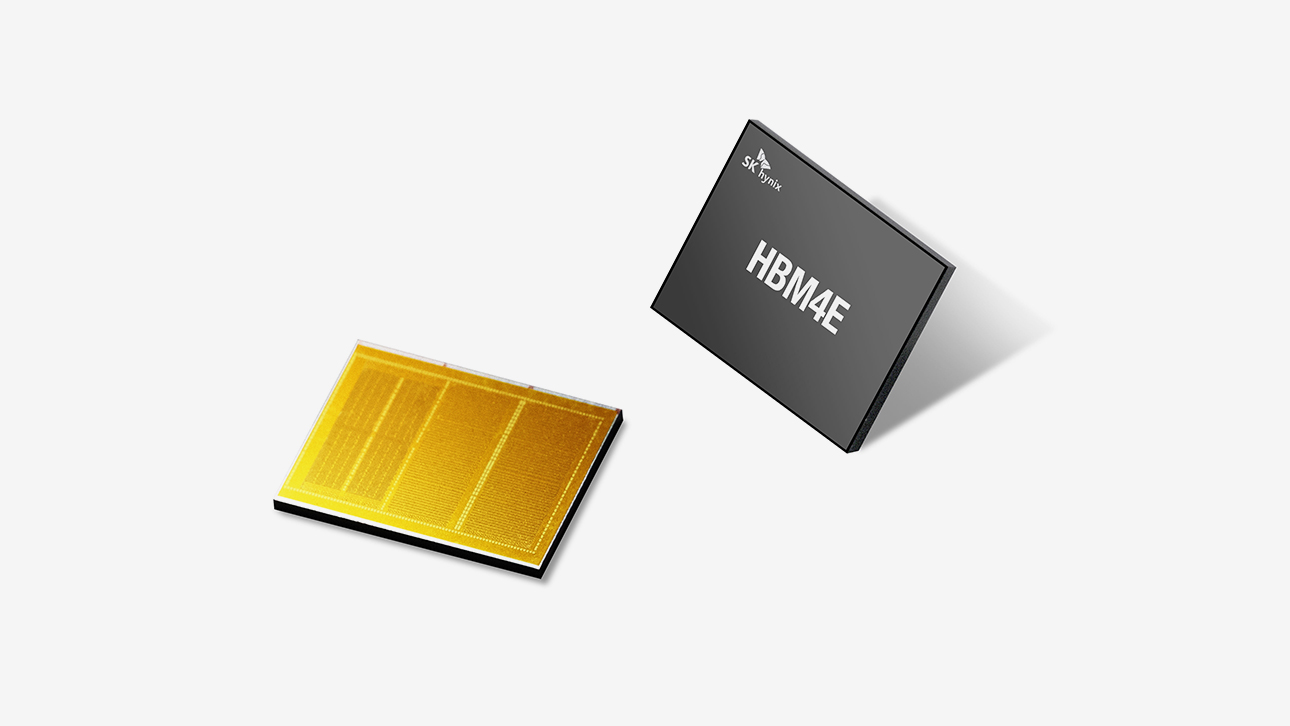
Image: SK hynix
Step 2: what a spot price is
The spot market is where leftover chips and modules change hands immediately, between distributors, module makers and smaller buyers. It's a small share of total sales, so it moves fast and swings both ways.
That's how you get headlines that seem to contradict each other. In spring 2026, DDR5 spot prices fell by nearly 30% in a month, and some 32GB retail kits dropped about as much, while contract prices kept rising. TrendForce said at the time that kit prices had fallen "sharply" in the US, Europe and China even as contracts held.
Step 3: where your RAM kit fits
A retail kit from Corsair, G.Skill or Kingston sits closer to the spot side. In the short term its price follows spot prices and how much stock distributors are holding. Over months, it follows the contract trend, because module makers eventually have to buy chips at those prices too. That last link is our reading of the data rather than something TrendForce states outright.
Consoles, laptops and graphics cards are mostly built on contract chips. That's why their prices tend to rise in steps, months after the memory market moves, and why they rarely fall back quickly.
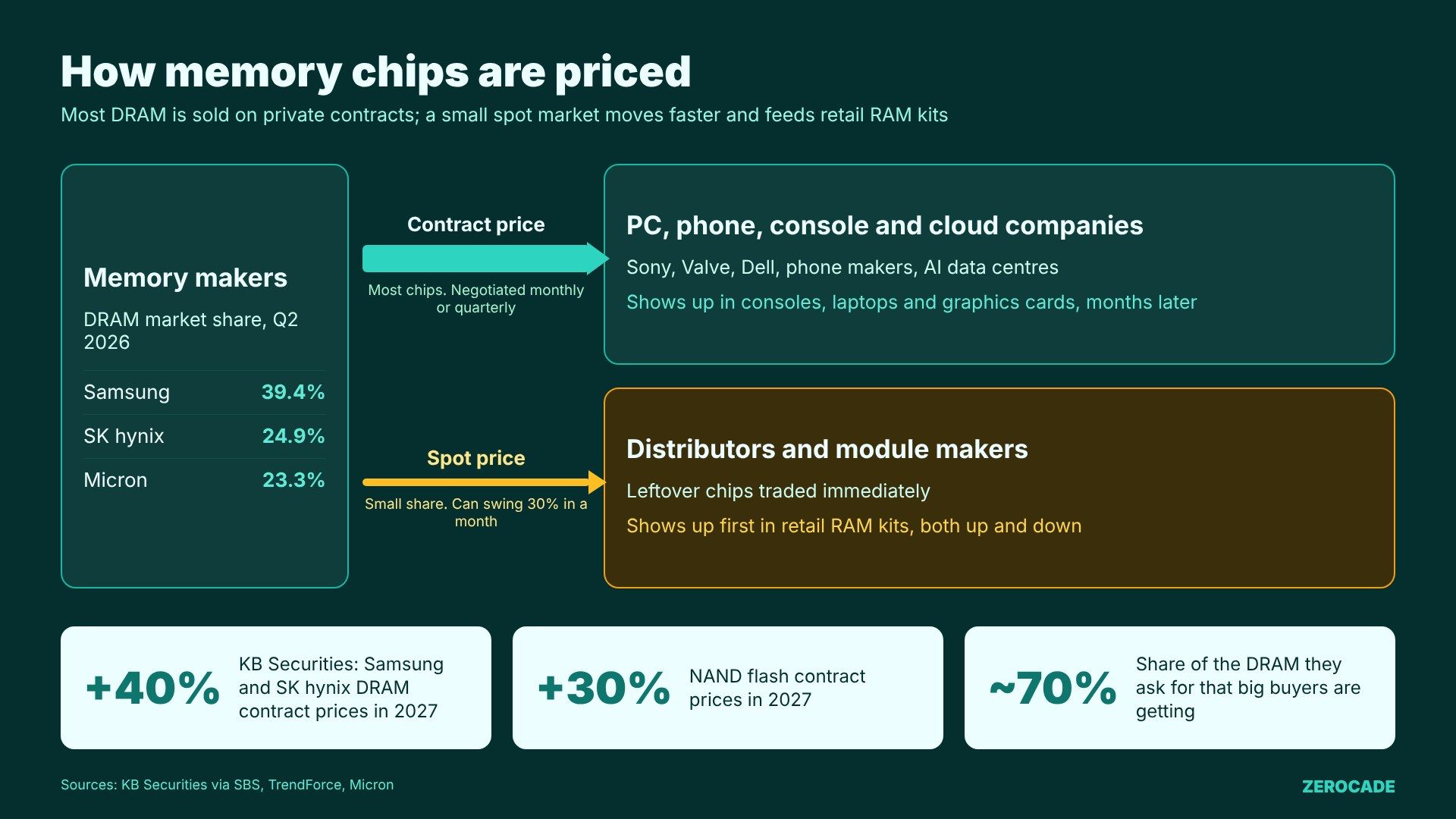
Image: Zerocade
Step 4: why supply is so tight
Three companies make almost all the world's DRAM. TrendForce's second-quarter 2026 figures had Samsung at 39.4%, SK hynix at 24.9% and Micron at 23.3%, with industry revenue up 59.5% in a single quarter to $154.7 billion.
All three are steering production towards HBM, the stacked memory used in AI accelerators. Micron said in August that HBM needs about three times the wafer area of DDR5 for the same capacity, and that the gap is "definitely not getting better". Every wafer turned into HBM is one that doesn't become PC or console memory. Our HBM guide explains how it's built.
Micron said in September that 2027 and 2028 will be "much tighter" than 2026. Samsung has said it expects constraints to last until at least 2028.
Step 5: when new factories arrive
Memory fabs take years to build and equip. The ones announced so far:
| Maker | Site | Expected |
|---|---|---|
| Micron | Idaho ID1 | Wafer output mid-2027 |
| SK hynix | Yongin, first cleanroom | February 2027 |
| Samsung | Pyeongtaek P5 | 2028 |
| Micron | Idaho ID2 and Japan expansion | Late 2028 |
| Samsung | Yongin | 2029 |
| Micron | New York fab 1 | 2030 |
The Samsung and SK hynix dates come from media and analyst reports compiled by TrendForce rather than the companies themselves. A new fab also takes time to ramp up, so on paper meaningful relief looks like 2028 at the earliest. Counterpoint expects memory prices to stay high until then.

Image: Micron
What it's done to gaming hardware
You've seen the effects all year:
- PS5 and PS5 Pro: Sony raised US prices to $600 and $900 from April, citing memory costs.
- Steam Deck OLED: up from $549 to $789 for 512GB in May. This week Valve closed new sign-ups for the 2TB Steam Machine, blaming memory costs rising at "unprecedented levels".
- Graphics cards: AMD reportedly raised what it charges board partners for GPU-and-memory kits, and Nvidia has reportedly cancelled a 24GB RTX 5080 over memory costs. Neither company has confirmed either report.
- Phones: leaks suggest the base Galaxy S27 could drop from 12GB to 8GB of RAM. That's unconfirmed.
Circana found the average price of gaming hardware in the US rose 16% between January and June.
Prices in India
At MD Computers, Corsair's Vengeance 32GB DDR5-6000 kit is listed at ₹62,999, against an MRP of ₹95,000, and a single 16GB DDR4-3200 stick is ₹10,400. Our DDR4 vs DDR5 guide covers which one makes sense for a gaming PC.
Phones have been hit too. Counterpoint found the average smartphone price in India rose about 16% in the first half of 2026, and phones under ₹10,000 rose about 32%, while shipments in that bracket fell 65% year on year.
What to watch
Watch TrendForce's first-quarter 2027 contract forecast, expected around the turn of the year, and Valve's January update on Steam Machine supply, which will show how hard the next round of contracts bites.