
The short version
- SMT (simultaneous multithreading), called Hyper-Threading by Intel, lets one physical CPU core run two threads at the same time, so an 8-core chip shows up as 16 threads.
- It works by filling the moments when a core would otherwise sit idle. In heavy multi-threaded work like rendering, that adds about 18% on average in one big test, and up to 67% in some tasks.
- In games, it barely matters. Turning it off changes frame rates by a few percent either way, depending on the game.
- Intel dropped it from desktop chips with the Core Ultra 200S in 2024. AMD kept it, and the PS5 and Xbox Series X both have it.
Why this is in the news
A new leak about Intel's 2028 desktop chips, Razor Lake, claims they'll still skip SMT on consumer models while Intel's server chips get it back. That's the latest turn in a story that started in 2024, when Intel's Core Ultra 200S became its first mainstream desktop line in decades without Hyper-Threading.
So, what did Intel give up, and does it matter for your next gaming PC?
How SMT works
A CPU core is a busy factory floor. It has units that do maths, units that load data, units that make decisions. A single program thread rarely keeps all of them busy all the time.
The biggest waste happens when a thread needs data that isn't in the core's fast cache. It has to wait for main memory, and for that time, much of the core does nothing.
SMT gives the core a second thread to work on. The core keeps two sets of the "bookkeeping" that describes where each thread is (its registers and state), but it shares the actual working parts: the execution units, the caches and the connection to the rest of the chip.
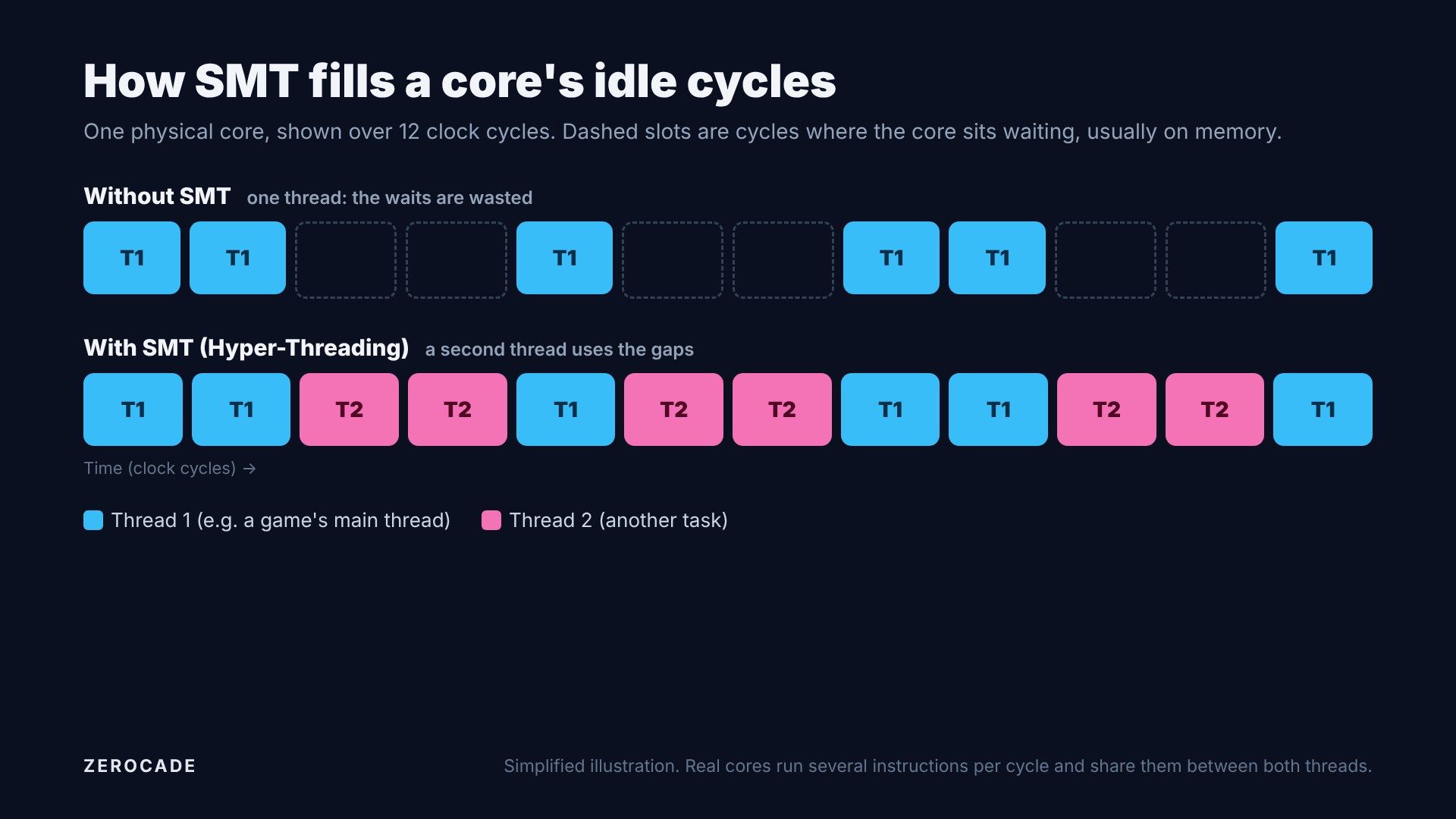
Image: Zerocade
Your operating system sees each core as two logical processors. When thread one stalls, thread two's instructions slip into the free slots. Nothing is doubled, so you never get twice the performance. You just waste less of what's already there.
That's also the catch. The two threads compete for the same resources, so when both are busy, each one can run a little slower than it would alone.
A short history
| Year | What happened |
|---|---|
| 1968 | IBM researches the idea in an experimental machine |
| 2002 | Intel ships Hyper-Threading on Xeon in February, then the 3.06GHz Pentium 4 in November ($637) |
| 2017 | AMD's first Ryzen chips bring SMT to AMD, with the Ryzen 7 1800X at 8 cores and 16 threads |
| 2020 | PS5 and Xbox Series X launch with 8-core, 16-thread AMD Zen 2 CPUs |
| 2024 | Intel removes Hyper-Threading from Lunar Lake laptops and Core Ultra 200S desktops |
Intel said at the time that the first Hyper-Threading added only about 5% to the chip's area for up to 30% more performance in some workloads. That's a great trade, and it's why SMT spread everywhere.
How much it helps, in numbers
The answer depends on what you run.
Heavy multi-threaded work is where SMT shines. Phoronix ran 57 tests on an AMD Ryzen AI 9 HX 370 laptop chip with SMT on and off. Every one was faster with SMT on, by 18% on average and up to 67% in one test, while power draw rose only about 2%.
Games are a different story:
- TechPowerUp turned SMT off on a Ryzen 7 9700X and saw gaming performance go up slightly: about 2.6% at 1080p on average. Baldur's Gate 3 gained over 7% at 4K, while Cyberpunk 2077 lost about 4% at 1080p.
- On a Ryzen 7 7800X3D, Baldur's Gate 3 lost 11% with SMT off.
- Hardware Unboxed tested 36 games on a Ryzen 9 3900X. In 31 of them the difference was negligible, and their advice was to leave SMT on.
Most games lean on a handful of fast threads, and an 8-core chip already has plenty. That's also why single-thread performance matters so much for gaming.
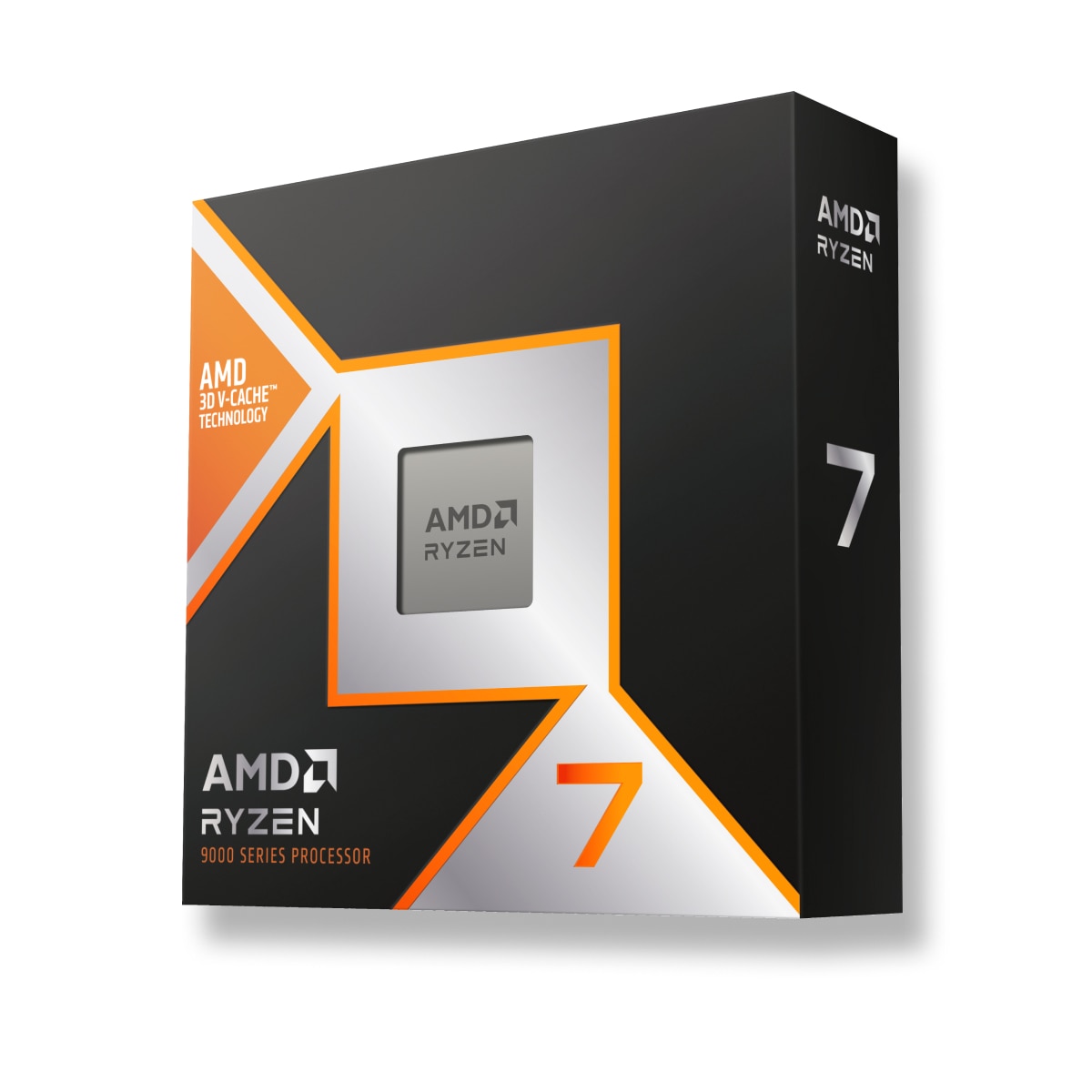
Image: AMD
The security problem
Sharing a core between two threads has a downside: one thread can sometimes learn things about the other by watching how the shared parts behave.
Researchers showed this as early as 2005, pulling crypto keys out of a Pentium 4's shared cache. In 2018, OpenBSD switched Hyper-Threading off by default after the Foreshadow (L1TF) flaw. In May 2019, the MDS bugs, including ZombieLoad, let one thread read another's data on the same core. Chrome OS turned Hyper-Threading off by default, and Apple warned that full protection on Macs meant disabling it, at a cost of up to 40% performance in some tasks.
Patches fixed most of this, but it gave chip designers one more reason to rethink SMT.
Why Intel dropped it
Intel's answer was its hybrid design. Its chips now mix big P-cores with small, efficient E-cores (how those work). Intel argued that adding more E-cores is a better way to get multi-threaded performance than SMT.
At the Lunar Lake briefing in 2024, Intel's Robert Hallock said its E-cores had become good enough to "deliver better than SMT". Intel's own figures for a P-core without Hyper-Threading:
- about 15% better performance per watt per unit of chip area
- about 5% better performance per watt
- about 15% less performance per unit of area
Removing SMT also makes each core simpler, smaller and, in the words of Intel's lead x86 architect Stephen Robinson, able to "go a little bit faster".
So the Core Ultra 9 285K has 24 cores and 24 threads (8 P-cores, 16 E-cores), and the Core Ultra 7 265K has 20 cores and 20 threads. The 265K sells for around ₹37,999 on Amazon.in.
Why AMD kept it
AMD doesn't have Intel's mix of core types on its desktop chips, and it says SMT still raises multi-threaded throughput without hurting single-thread speed. Every Ryzen 9000 chip has it. The Ryzen 7 9800X3D, the most popular gaming CPU right now, has 8 cores and 16 threads, and listings on Amazon.in range from about ₹46,800 to ₹55,900.
AMD's next server chips on Zen 6 keep it too, with up to 256 cores and 512 threads. In April 2026, AMD said Intel's "interesting choices" on multithreading would help it win server customers.
Is Intel bringing it back?
Partly. In July 2026, Intel confirmed that its future Coral Rapids Xeon server chips will have SMT again. CEO Lip-Bu Tan had already admitted in 2025 that dropping it put Intel at a disadvantage in data centres.
For your PC, nothing is confirmed. Leaks say the Nova Lake desktop chips due in 2027 have one thread per core, and the latest Razor Lake leak says client chips stay without SMT. Some rumours point to a return around 2029, but Intel hasn't said so.
What about consoles?
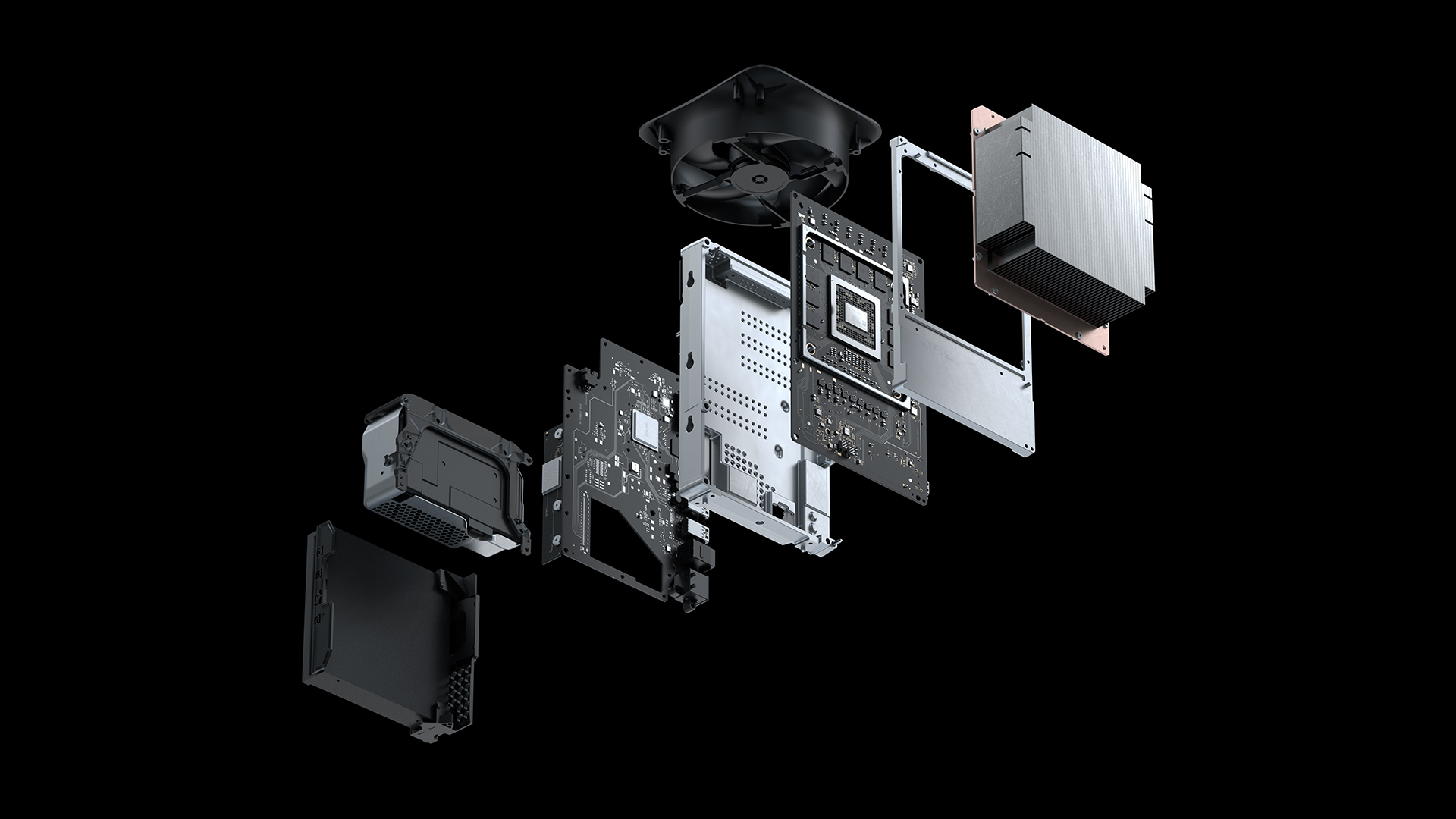
Both current consoles use 8-core AMD Zen 2 CPUs with SMT, so 16 threads. The Xbox Series X lets developers choose: with SMT off, the CPU runs at 3.8GHz; with SMT on, it runs at 3.6GHz across all 16 threads, according to Microsoft. Games that need the highest clock on fewer threads can trade the extra threads away.
How to check your own PC
On Windows, press Ctrl + Shift + Esc to open Task Manager, go to Performance, then CPU. Look at two numbers: Cores and Logical processors. If logical processors is double the cores, SMT is on. On an Intel Core Ultra 200S chip, the two numbers will match.
Should you care?
For gaming, not much. A CPU's single-thread speed and cache matter far more than whether it has SMT. If you also stream, edit video or compile code, SMT is a free boost on AMD chips, and Intel makes up for it with extra E-cores.
Before you buy, compare cores and threads together with real benchmarks for the games and apps you use, not the thread count alone.