
The short version
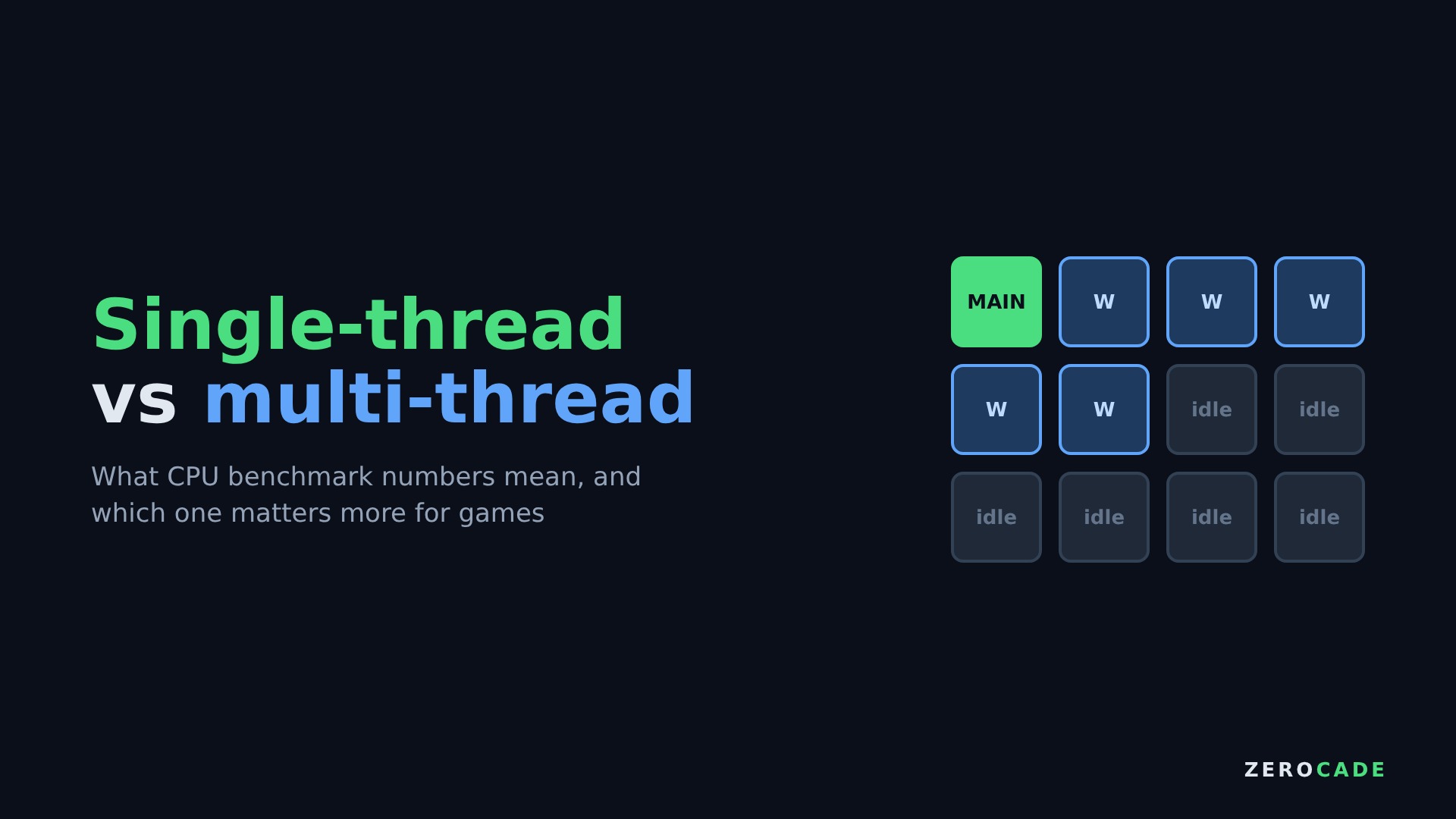
- A single-thread score shows how fast one CPU core is. A multi-thread score shows how fast all the cores are together.
- Most games lean on one main thread that has to finish before each frame is ready, so single-thread speed usually matters more for frame rates.
- Extra cores still help, up to a point: games spread side jobs like physics, audio and asset loading across them.
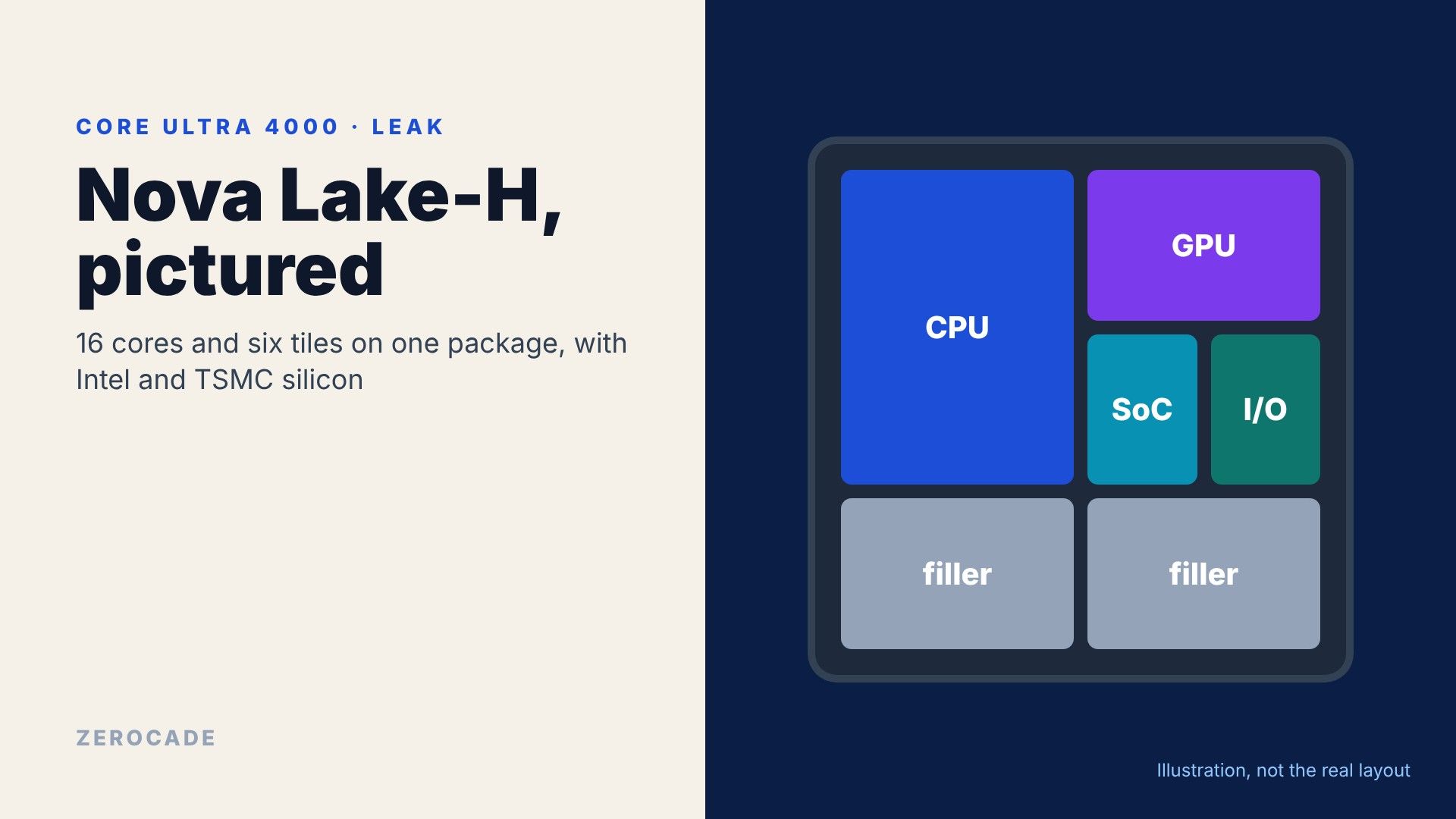
- Video editing, 3D rendering and compiling scale with cores, which is where multi-thread scores matter. Today's Nova Lake leak is a good example of a chip that wins one and loses the other.
Cores and threads, quickly
A core is one complete processing unit inside the CPU. A thread is a stream of instructions the core is working through.
Many cores can run two threads at once by keeping a second job ready for whenever the first is waiting. AMD calls this SMT and Intel calls it Hyper-Threading. That's why a Ryzen 9 9950X3D is listed as 16 cores, 32 threads.
Intel dropped Hyper-Threading on its current desktop chips, so the Core Ultra 9 285K is 24 cores, 24 threads. Its cores also come in two types: 8 fast performance cores and 16 smaller efficient cores.
What the two scores actually measure
Benchmarks like PassMark, Cinebench and Geekbench run the same set of jobs twice:
- Single-thread run. The test gives the CPU one job at a time, so only one core is busy. The score depends on how fast that one core is, which comes down to its clock speed and how much work it does per clock (often called IPC).
- Multi-thread run. The test splits the work into many pieces and hands one to every thread at once. The score depends on how many cores there are, how fast they stay when they're all busy, and how well the chip handles the heat and power.
So a chip with a few very fast cores can win the first run and lose the second. A chip with lots of slower cores can do the opposite.
Image: AMD
Why games lean on one core
A game runs in a loop. For every frame, the CPU has to read your input, update the game world, work out what changed, and then prepare instructions for the graphics card, called draw calls. Only then can the GPU render the frame.
Much of that work has to happen in order. You can't decide what to draw before you know where everything is. So most engines put this core sequence on one main thread and hand side jobs to worker threads.
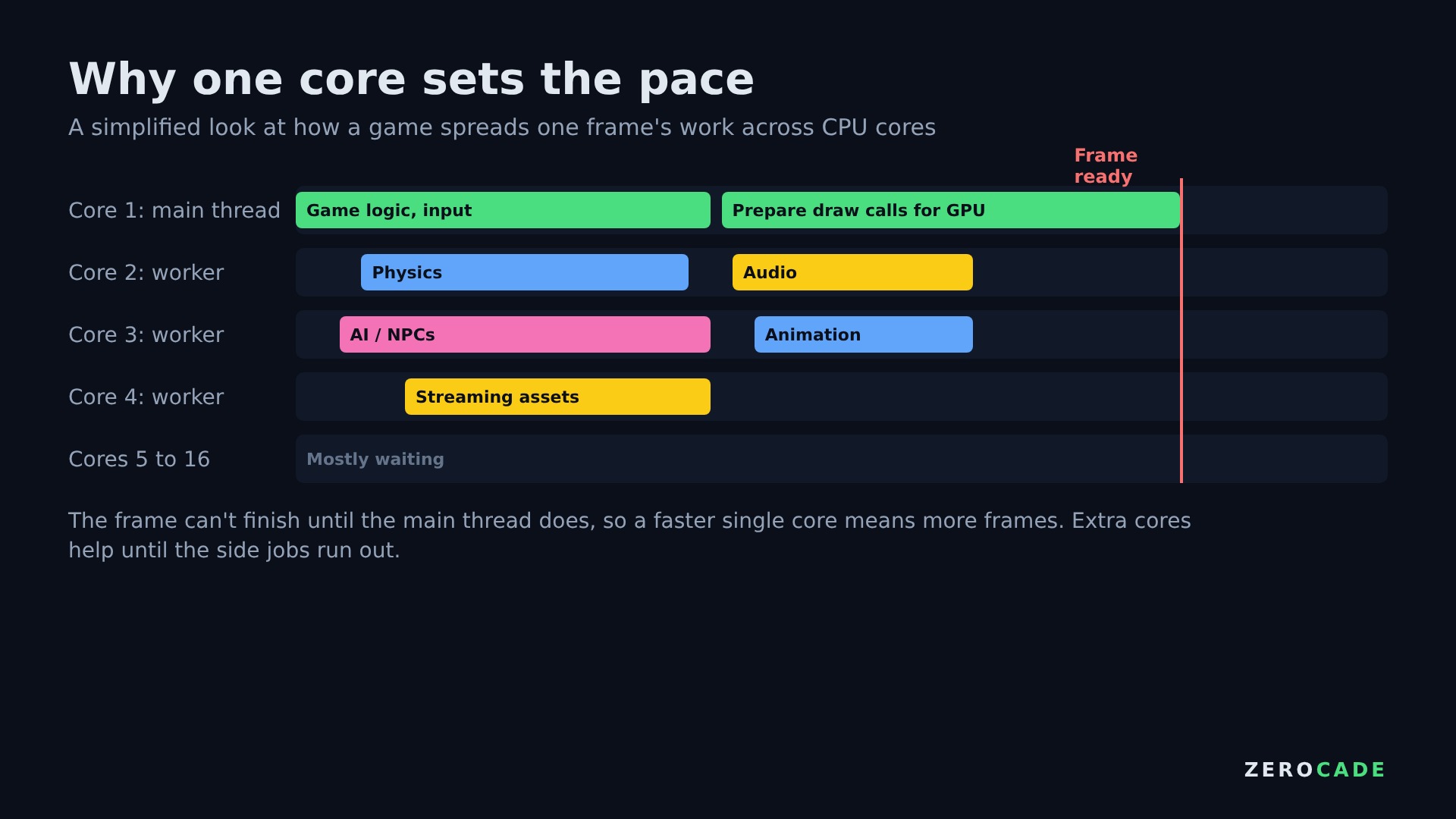
Image: Zerocade
The frame isn't ready until the main thread finishes. If the main thread takes 8 milliseconds, you can't get more than about 125 frames per second, however many cores are sitting idle. That's what people mean by a game being CPU-bound or "limited by single-thread performance".
You see it most in:
- Esports shooters like Valorant and Counter-Strike 2, where players chase very high frame rates and the GPU often isn't the limit.
- Simulation-heavy games with big cities or huge unit counts.
- Any game at 1080p with a fast graphics card, since the GPU finishes its part quickly and waits on the CPU.
At 4K, the graphics card usually becomes the bottleneck instead, and CPU differences shrink.
Where more cores do help in games
Modern engines are much better at spreading work than they were ten years ago. Worker threads handle physics, animation, AI, audio and loading new parts of the world as you move. Games designed for the PS5 and Xbox Series X, which have 8 cores and 16 threads, are built to use several cores from the start.
A few specific cases also hit every core hard:
- Shader compilation, when a game prepares its graphics code on first launch, often runs on all cores and finishes faster on bigger chips.
- Streaming or recording while you play adds a second heavy job.
- City builders and strategy games with lots of independent agents can scale well.
The rule of thumb: beyond 6 to 8 fast cores, extra cores rarely add frames in today's games. Fast cores, and a big cache to keep them fed, usually matter more. That's why an 8-core chip like the Ryzen 7 9850X3D is a popular gaming pick over chips with twice the cores. Our 3D V-Cache explainer covers why the cache helps so much.
How to read a leak with both numbers
When a new chip leaks, look at the two scores separately:
- A big single-thread jump is good news for gaming, especially if it came at a lower clock speed. That points to a better core design.
- A big multi-thread jump matters more for creators, programmers and streamers.
- Early samples often run slower clocks and unfinished software, and multi-thread scores suffer most.
And remember that synthetic benchmarks aren't games. Our guide on how to read a benchmark leak explains why one database entry can mislead. Real game tests from reviewers, at the resolution you play, are the numbers to wait for before you spend money.