


The short version
- Reballed RAM is a memory chip removed from an old device, cleaned, given fresh solder balls and fitted into a new one.
- Market research firm TrendForce says the memory shortage is pushing phone makers to use it. It expects reballed memory in 3-4% of smartphones in 2026 and 7-9% in 2027.
- It's mostly expected in cheap 4G phones priced under CNY 1,299 (about ₹15,500), using 4GB of LPDDR4X.
- The risks are quality, lifespan and warranty. TrendForce hasn't named any brands using it.
What "reballing" means
Phone memory doesn't sit in a slot like a PC's RAM stick. It's a small chip soldered straight onto the phone's circuit board. Underneath it is a grid of tiny solder balls, called a ball grid array (BGA), and each ball connects one contact on the chip to the board.
You can't simply unplug that chip. To reuse it, a technician heats it until the solder melts, lifts it off, cleans away the old solder and puts a new grid of balls on it. That last step is the "reball". The chip can then be soldered onto a new board as if it were fresh.
Repair shops have done this for years to fix phones and consoles. What's new is the idea of doing it at factory scale, to fill new phones.
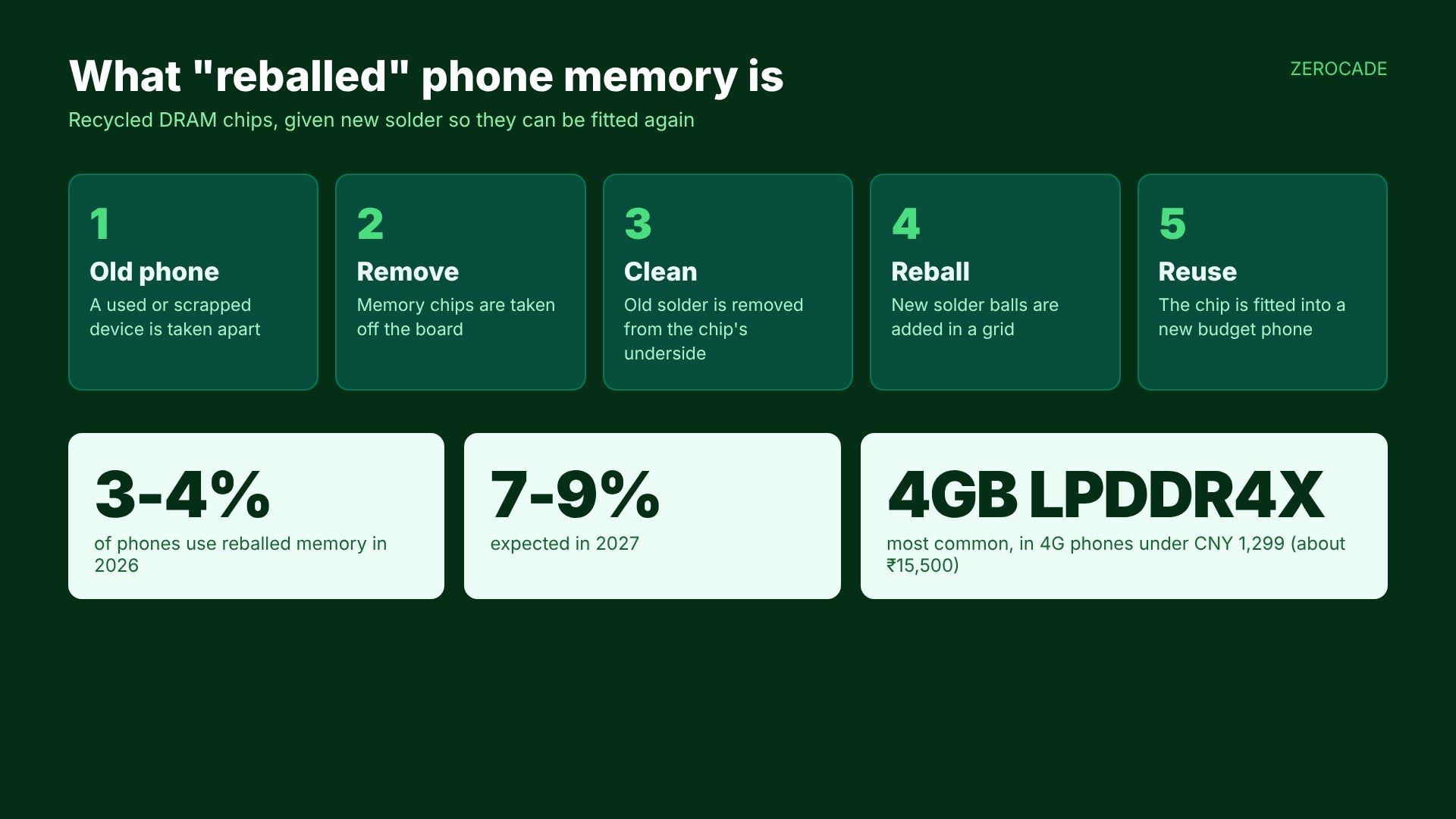
Image: Zerocade
Why phone makers are turning to it
It comes down to the memory shortage. AI data centres are buying huge amounts of memory, and chipmakers have moved their factories towards the expensive kinds that AI servers need. That leaves less of the older, cheaper memory that budget phones use.
TrendForce's report, published on November 6, says DRAM prices are expected to rise even faster in the first quarter of 2027. For a phone that sells for very little, memory is a big share of the cost. A brand that can't raise its price, or doesn't want to cut RAM, has few options left. Recycled chips are one of them.
Older chips like LPDDR4X are a good fit. Plenty of them sit in retired phones and tablets, and they're exactly what a basic 4G phone needs. Newer phones mostly use LPDDR5X, which our phone SoC guide explains sits right next to the main chip.
The bigger picture is in our coverage of Samsung's warning that the shortage will worsen in 2027 and SK hynix's forecast that it could last until 2030.

Image: Samsung Semiconductor
The risks
TrendForce lists four problems, and they're worth taking seriously:
- Sourcing. Collecting, sorting and testing used chips is far messier than buying new ones from a single supplier.
- Quality consistency. Chips from different old devices have different histories. Some ran hot for years, some barely ran at all.
- Lifespan. Every heat cycle during removal and reballing stresses the chip and its solder. A reused chip has already lived part of its life.
- Warranty and repair costs. If more phones fail early, the brand pays for repairs and loses trust.
None of this means a reballed chip will fail. Properly tested parts can work fine. But on paper, it's a step down from new memory, and it's happening in the phones where buyers have the least money to replace a dud.
Will you be able to tell?
Probably not. Spec sheets list how much RAM a phone has and its type, not whether the chip is new. TrendForce hasn't said which brands are using recycled memory, and no brand has announced it.
Since the forecast centres on phones under about ₹15,500, Indian buyers of entry-level phones are the ones most likely to end up with one. A longer warranty, and buying from a brand with a good service network, are the sensible protections.
What to watch
Watch for budget phones that quietly drop to 4GB of RAM, or keep old LPDDR4X while prices rise. If a brand starts offering unusually short warranties on cheap models, that's worth noticing too. Memory prices, as Sam Altman's comment on PC RAM showed, aren't coming down soon.