
The short version
- A US retailer check published on October 28 found the cheapest in-stock RTX 5080 at $1,979.99, roughly ₹1.88 lakh. That's about $800 more than two months ago and almost double the $999 launch price.
- It's now level with what the far faster RTX 5090 cost at launch ($1,999).
- In India, price tracker GPU Prix shows the cheapest in-stock RTX 5080 at ₹2,02,000 on October 28, against a 12-month median of about ₹1,59,500.
- Nvidia hasn't changed the official price or explained the rise. The most likely cause is the shortage of GDDR7 graphics memory.
What a 5080 costs right now
The numbers come from a survey by VideoCardz, which only counted new cards with confirmed stock or a working buy button. Used, refurbished, backordered and marketplace listings were left out, so this is what a normal buyer would actually pay.
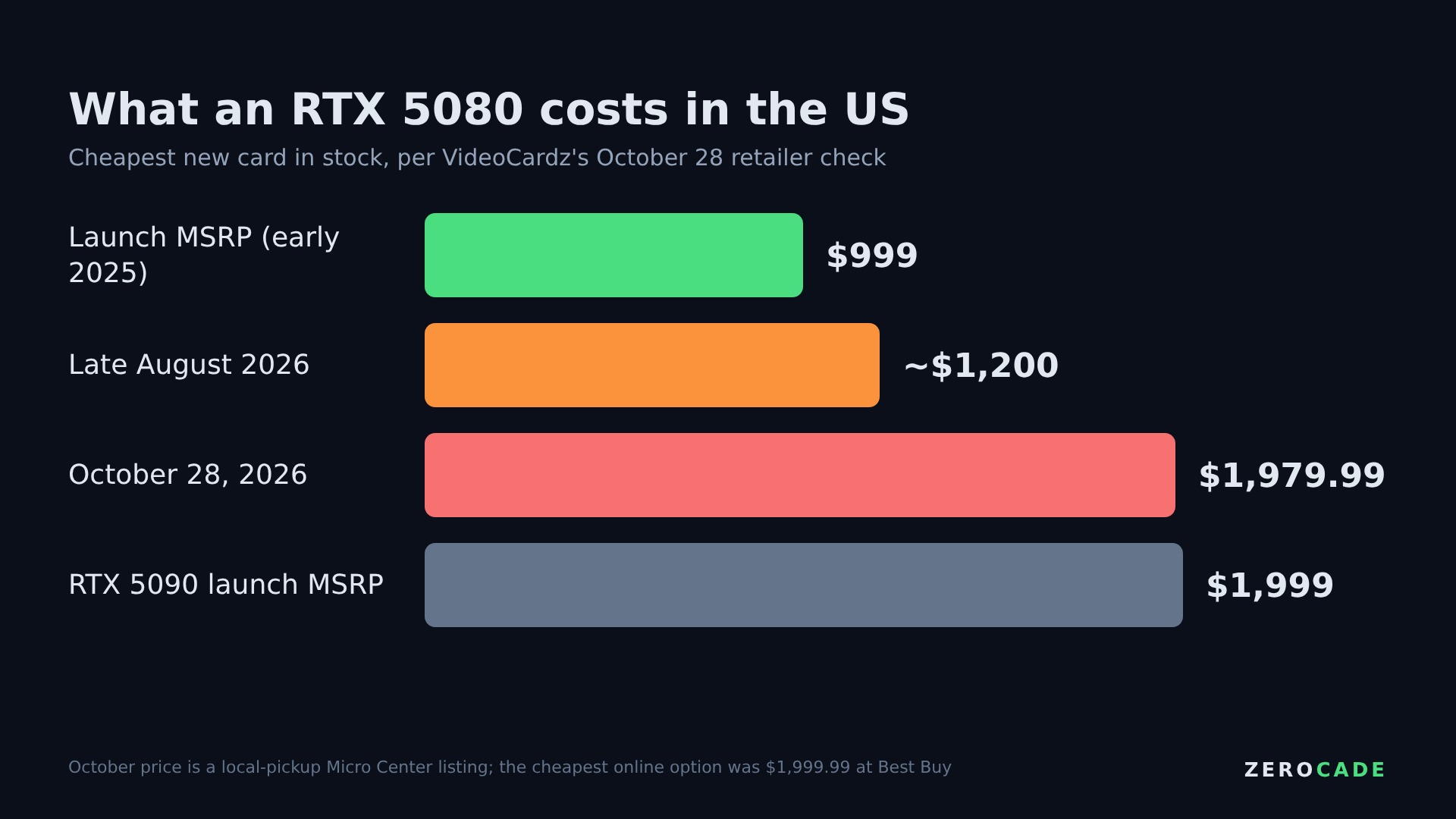 Image: Zerocade
The cheapest two cards, a Gigabyte Windforce SFF OC and an MSI Suprim Liquid SOC, were both $1,979.99 at Micro Center, but only for pickup at selected stores. Best Buy's PNY Triple Fan OC at $1,999.99 was the cheapest you could order online. Premium models went well past that: Asus's ROG Astral OC was $2,079.99 and the Prime OC $2,349.99.
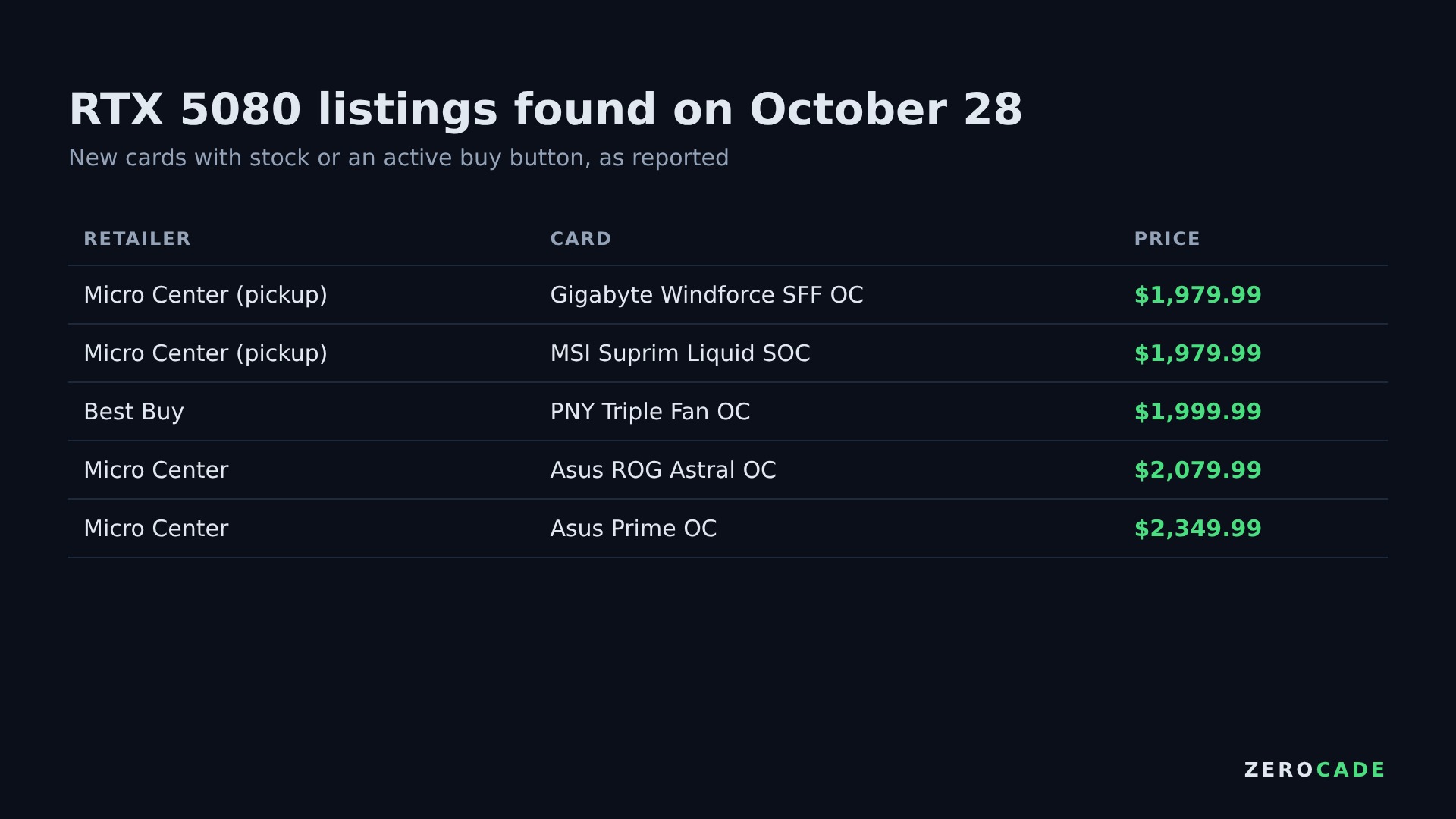 Image: Zerocade
Hardware Busters ran its own check and found the same floor across Best Buy, Micro Center, Amazon, Newegg and B&H: in-stock cards start at roughly $2,000, and B&H's cheaper listings are all marked out of stock. Two months ago, it says, the cheapest listings sat around $1,200. Analyst Josh Walrath put the move at "from around $1,200 to as much as $2,200 for some models" on October 27.
Why is this happening?
Nobody official has said. Nvidia hasn't responded to media questions, and there's been no change to the card's official price. Board partners have shared little about supply.
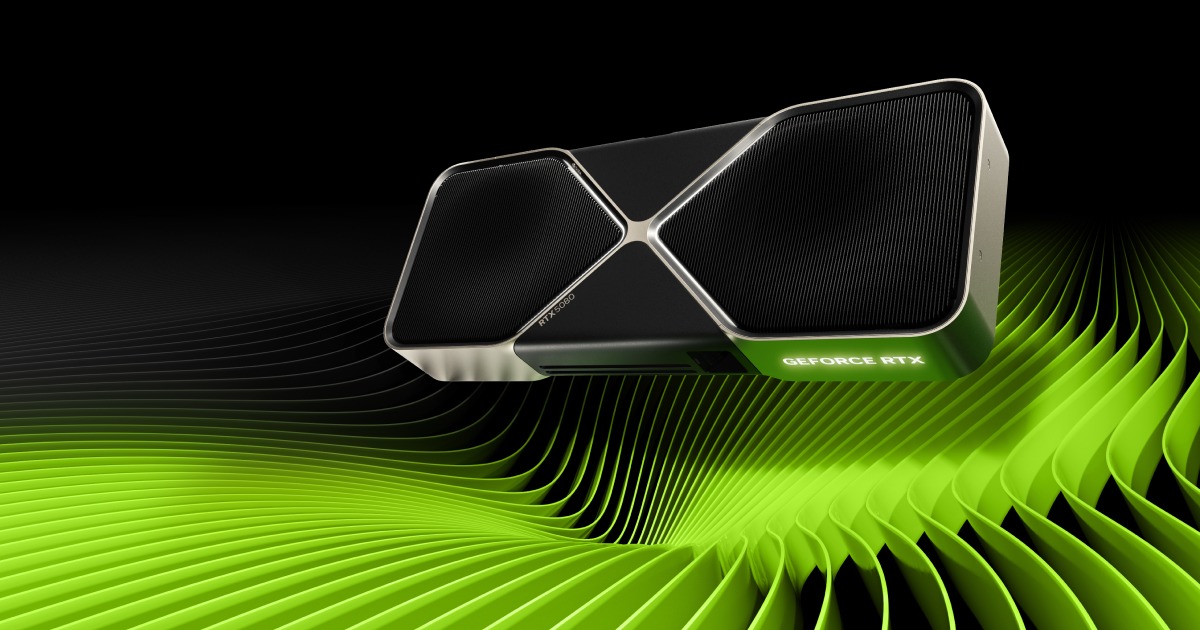
The most likely suspect is memory. The RTX 5080 carries 16GB of GDDR7, the newest kind of graphics memory, and GDDR7 is in short supply this year. Memory makers are pouring their capacity into high-bandwidth memory for AI data centres, which leaves less for gaming cards and pushes up what board partners pay for every chip. Our VRAM explainer covers what that memory does and why a 16GB card is worth more than it used to be.
Memory costs are showing up elsewhere too. Apple's new M6 Macs launched at higher prices this week, and memory is the main reason given in reports that the PS6 could cost over $1,000.
 Image: Nvidia
The rest of the RTX 50 line
The 5080 isn't the only card under pressure. The flagship RTX 5090, which launched at $1,999, has seen street prices as high as $8,500. Earlier this month Nvidia said the 5090 is "not discontinued, just scarce", after reports that production had stopped.
So far, nobody has reported the same jump on cheaper cards like the RTX 5070 or 5060. Hardware Busters warns that the RTX 5070 Ti and the 16GB RTX 5060 Ti could be next, since they use the same GDDR7 memory in large amounts. That's an educated guess, not a measured trend yet.
What about India?
Indian GPU prices have always run above US prices once import duties and GST are added, and the RTX 5080 is no different. GPU Prix, which tracks listings at Indian retailers such as EliteHubs and Vedant Computers, showed these figures on October 28:
| Price | |
|---|---|
| Cheapest in-stock RTX 5080 (Gigabyte Windforce) | ₹2,02,000 |
| 3-month median | ₹1,55,599 |
| 12-month median | ₹1,59,489 |
| 12-month low | ₹1,14,393 |
Several retailers still list cheaper cards, some around ₹1.15 to ₹1.25 lakh, but those listings are out of stock. EliteHubs, for example, showed every one of its RTX 5080 cards as unavailable when checked. In practice, if you want a card today, expect to pay around ₹2 lakh, and treat anything much cheaper as a price you probably can't get.
Should you wait?
On paper, this is a bad time to buy a high-end Nvidia card. At $1,999.99 the 5080 costs what a 5090 did at launch, for much less performance. If your current GPU still runs your games, waiting is the safer bet, because prices that rose this fast on shortage can fall back once supply recovers. The catch is that nobody knows when that will be.
If you must buy now, compare a few retailers, ignore out-of-stock "deals", and check whether a 16GB card a tier down, like the RTX 5070 Ti or AMD's Radeon RX 9070 XT, covers the resolution you play at.