

The short version
- A slide shared on X by the leaker HXL appears to show Microsoft's plan for Windows AI PCs, split into four tiers by memory: 8GB, 16 to 64GB, 128GB and over 128GB.
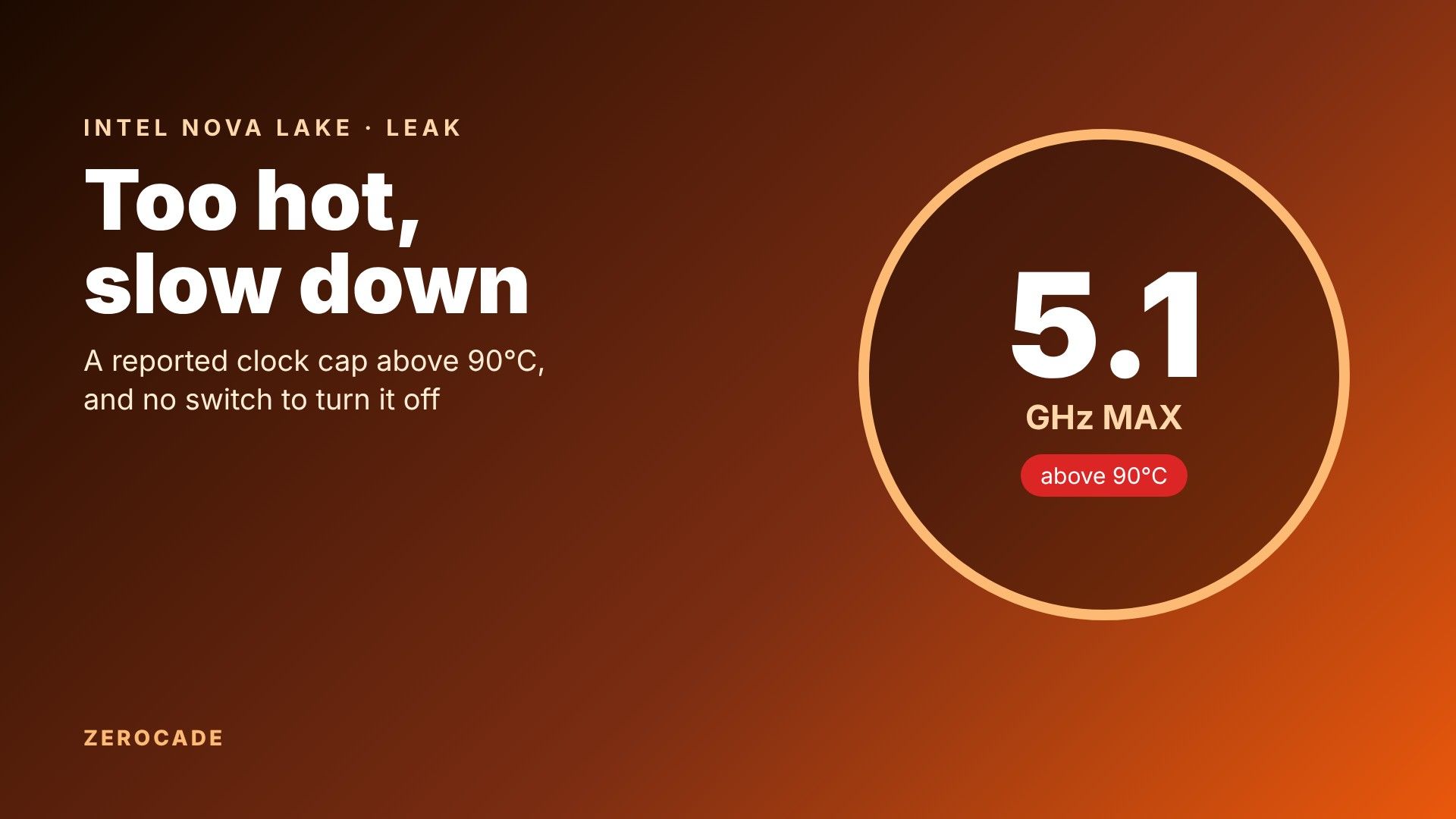
- It lists two unannounced chip families: AMD's Ryzen AI 500 and Intel's Core Ultra Series 4, codenamed Nova Lake.
- The slide's title is "Windows is the home for hybrid intelligence", meaning AI work split between your PC and the cloud.
- Microsoft hasn't officially confirmed it. Treat the details as a leak, even though it looks like a real presentation slide.
What the slide shows
The slide surfaced around November 3, posted by HXL (who uses the handle @9550pro on X). Windows Central credits the image to Microsoft via HXL. PC Games Hardware also calls it an apparent Microsoft slide, but stresses that Microsoft hasn't presented or confirmed this classification. Microsoft did publish a blog post on October 7 about building Windows for "hybrid intelligence", but that post doesn't include tiers, memory limits or chip names.
The interesting part is how the tiers are split. Microsoft isn't grouping PCs by processor speed or by how many TOPS the NPU can do. It's grouping them by total memory. Running AI models on your own PC needs a lot of RAM, because the model has to fit in memory, so RAM decides what a PC can do locally.
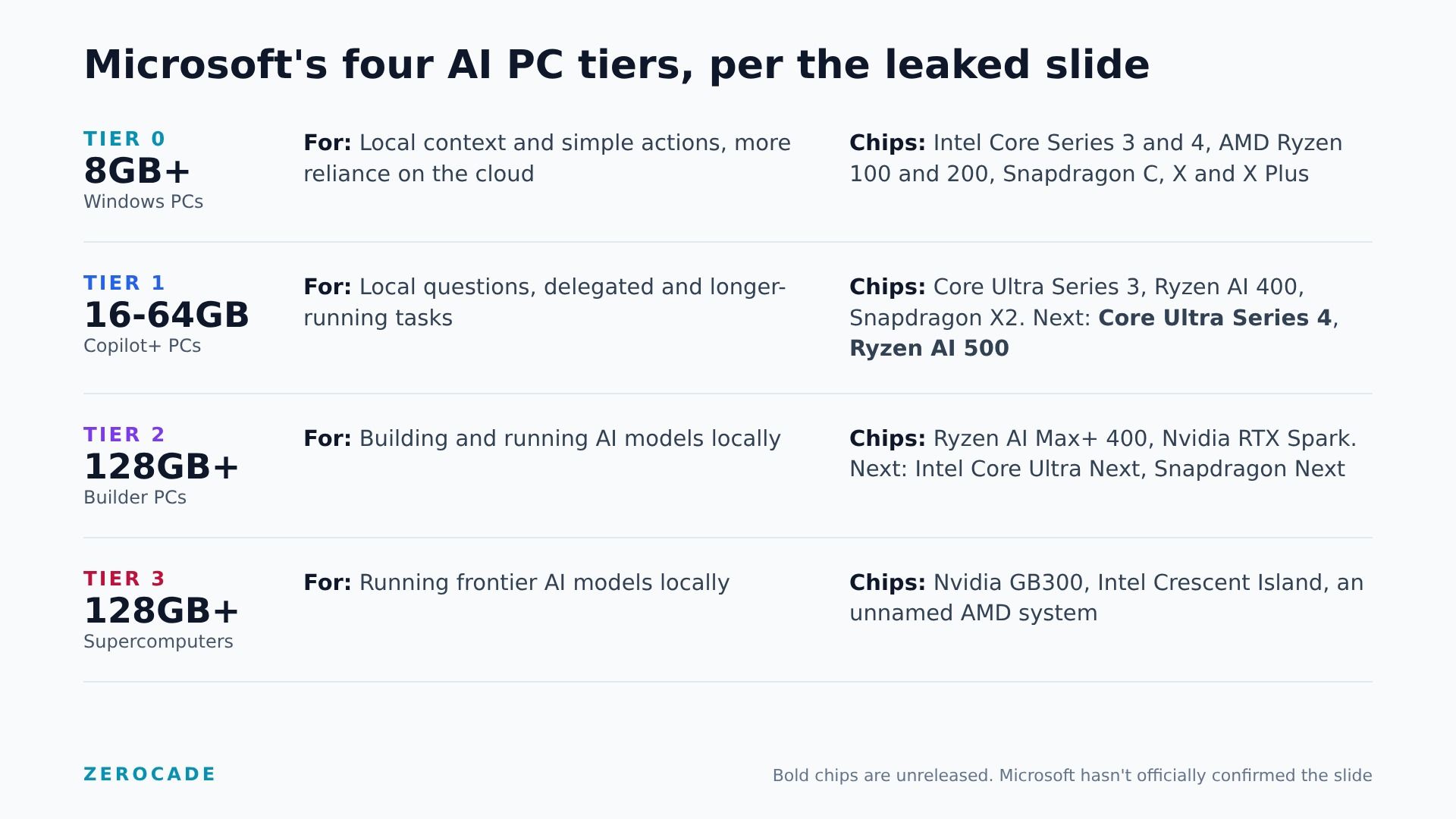
Image: Zerocade
The four tiers
Tier 0: Windows PCs, 8GB or more. This is the everyday laptop tier. The slide says these handle local context and simple actions, so they'll lean on the cloud for anything heavy. Chips listed include Intel's Core Series 3 and 4, AMD's Ryzen 100 and 200, and Qualcomm's Snapdragon C, X and X Plus.
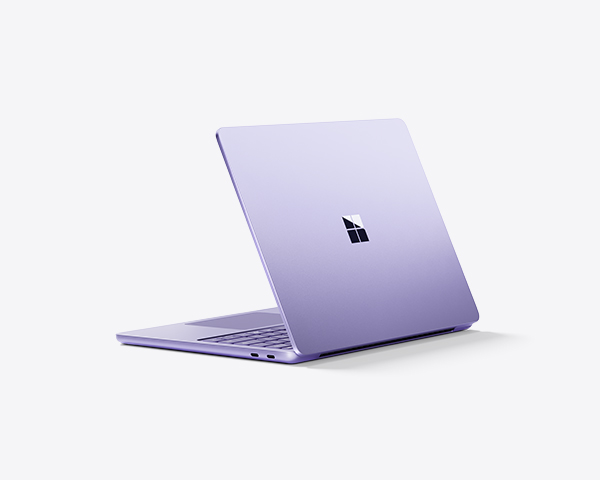
Image: Microsoft
Tier 1: Copilot+ PCs, 16GB to 64GB. These can answer questions locally and run longer tasks without the cloud. The 16GB floor matches Microsoft's existing Copilot+ rules, which also require an NPU of at least 40 TOPS and 256GB of storage. Our guide to NPUs and TOPS explains what that number means. Today's chips here are Intel's Core Ultra Series 3 (Panther Lake), AMD's Ryzen AI 400 and Qualcomm's Snapdragon X2. The next ones are Core Ultra Series 4 and Ryzen AI 500.
Tier 2: Builder PCs, 128GB or more. These are machines for building and running AI models locally. The slide lists AMD's Ryzen AI Max+ 400 and Nvidia's RTX Spark, both on sale now, plus a future Intel Core Ultra Next and Snapdragon Next. They work because their processor and graphics share one big pool of memory. Our explainer on unified memory covers why that matters.
Tier 3: supercomputers, over 128GB. These are desk-side systems built to run frontier AI models without a data centre. The slide names Nvidia's GB300, Intel's Crescent Island AI graphics card and an unnamed AMD system.
The unreleased chips
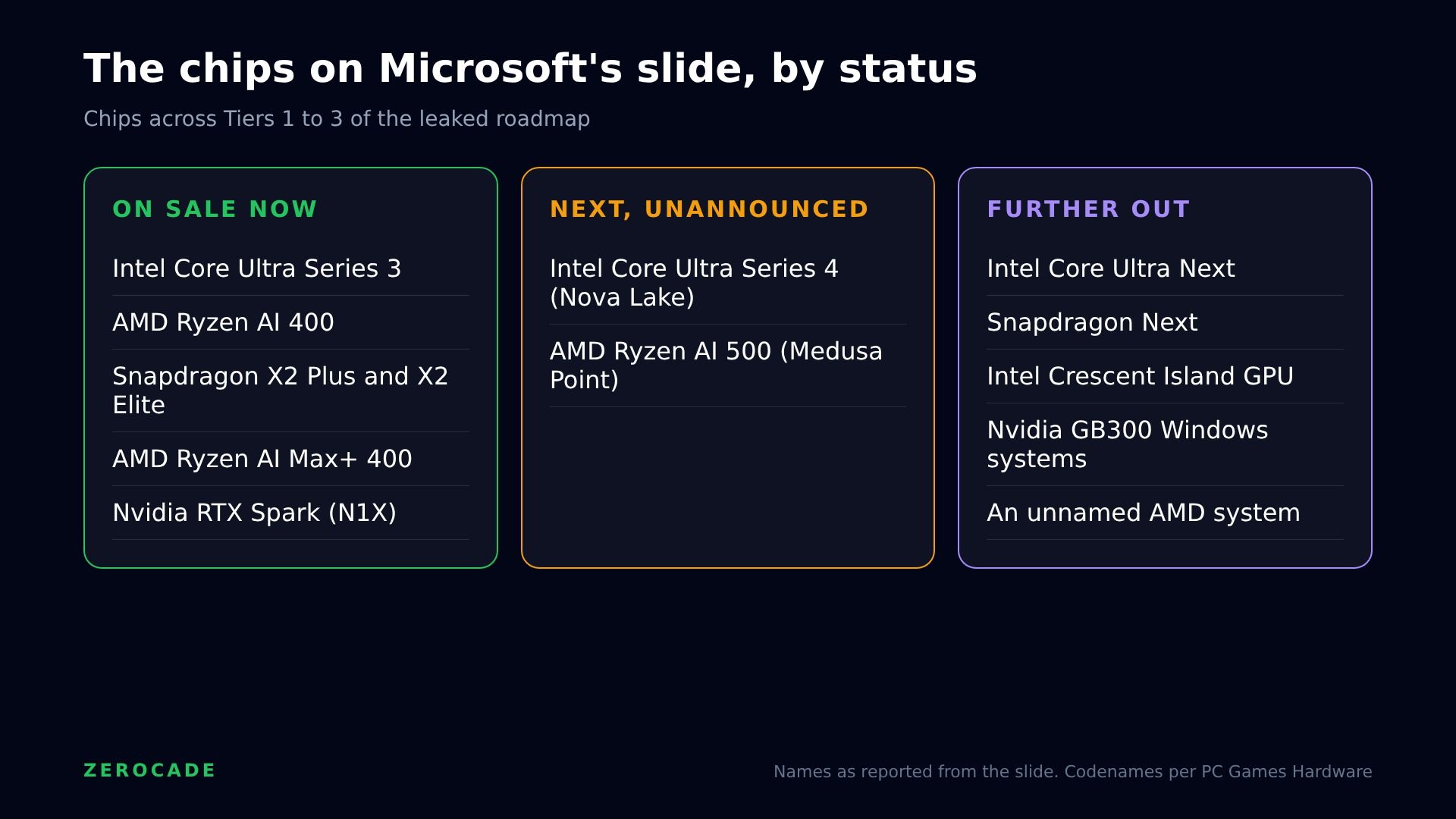
Image: Zerocade
Ryzen AI 500 is AMD's next laptop chip family, reportedly codenamed Medusa Point. AMD hasn't announced it. PC Games Hardware says it's expected to use Zen 6, and thinks a CES 2027 debut looks likely.
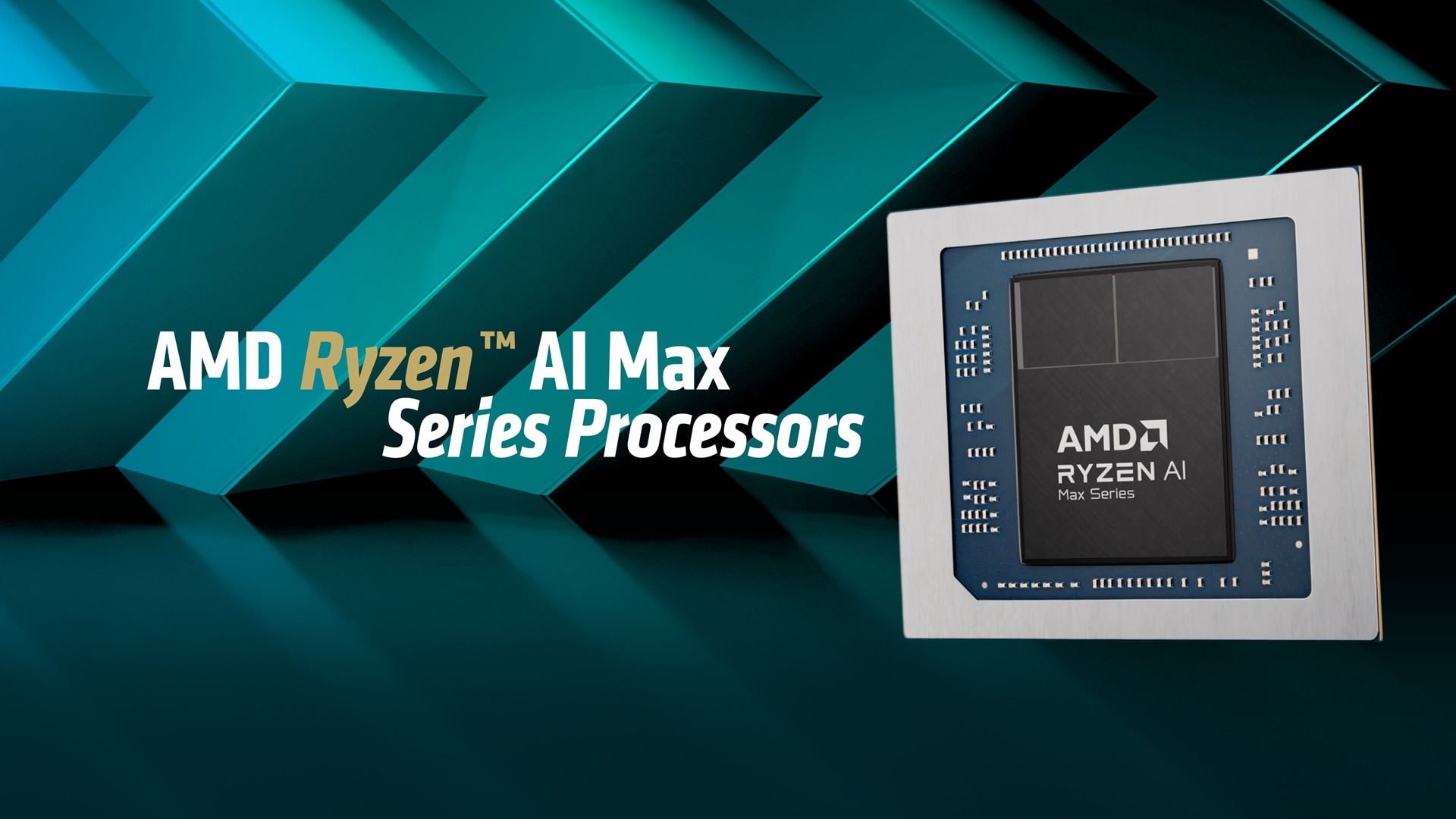
Image: AMD
Core Ultra Series 4 is Intel's Nova Lake generation, the follow-up to Panther Lake, expected in both desktops and laptops. Our guide to Intel's chip codenames shows where it fits. Seeing both names on a Microsoft slide doesn't tell us dates, but it does suggest Windows laptops with them are already being planned.
Intel Core Ultra Next has no details at all yet. The name sits in Tiers 1 and 2, which suggests a large-memory chip in the style of AMD's Gorgon Halo, but that's our reading, not something the slide says.
What it means if you're buying a laptop
On paper, the message is that 16GB is the real minimum for a Windows laptop that does AI work on the device, and 8GB machines are mainly cloud-dependent. Microsoft still supports 8GB. Windows Central notes it has been tuning Windows 11 for 8GB PCs. PC Games Hardware points out that Microsoft announced an 8GB Surface Laptop with Core Ultra Series 3 at $1,299 (about ₹1,23,000), and it would sit in the lowest tier on this slide.
There's a cost problem too. Memory prices have climbed sharply this year because AI servers are buying so much of it. Sorting PCs by RAM just as RAM gets expensive could push the better tiers further out of reach for buyers on a budget.
Watch for CES 2027 in January, where AMD and Intel are expected to talk about their next laptop chips, and for any official word from Microsoft on whether these tiers become a label you'll see on laptops.