
The short version
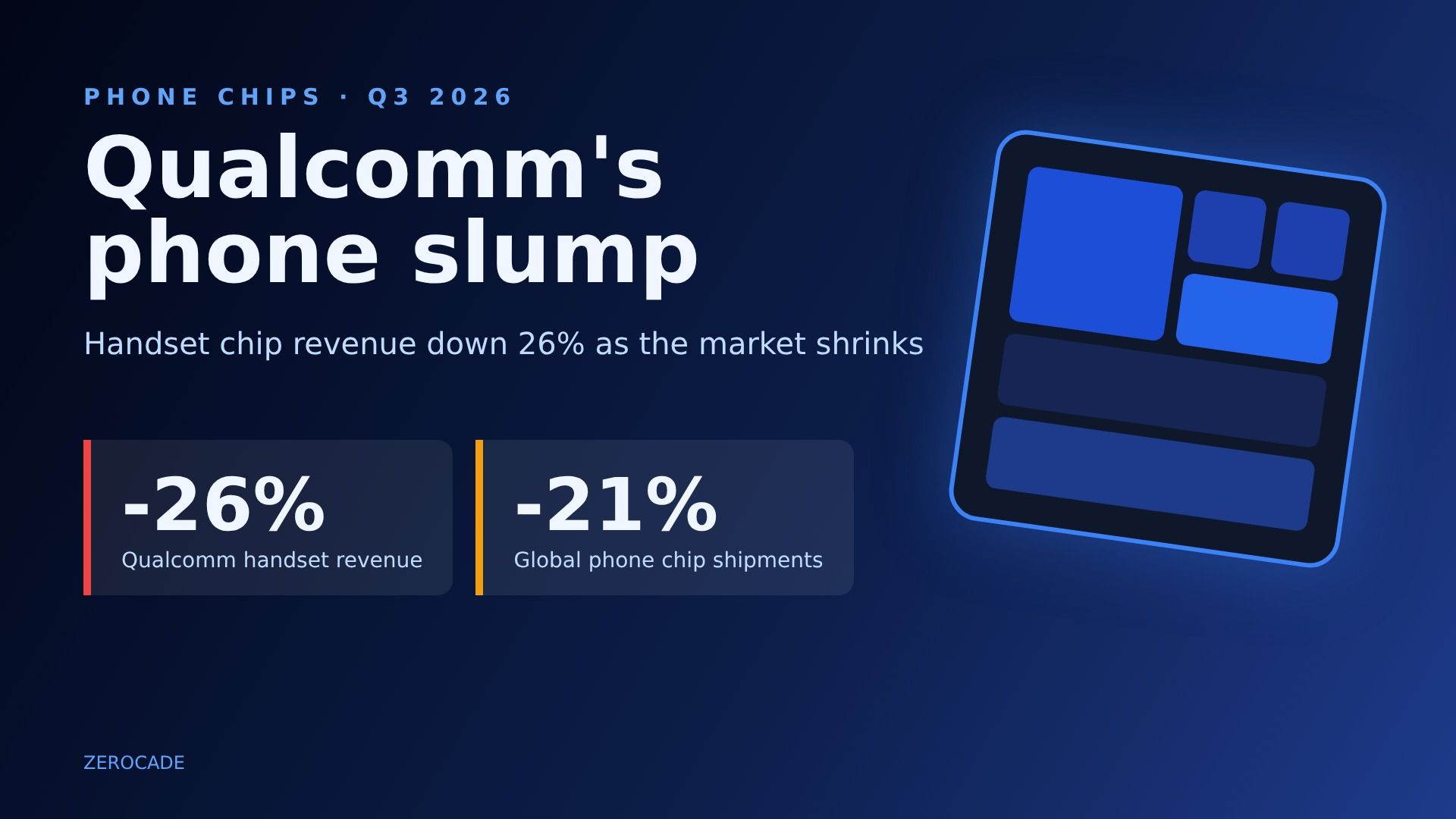
- Qualcomm's phone chip revenue fell 26% to $5.14 billion (about ₹48,800 crore) in the July to September quarter. Total revenue was $10.44 billion (about ₹99,200 crore), down 7%.
- On the same day, Counterpoint Research said worldwide smartphone chip shipments fell 21% year on year. MediaTek still leads with 28%, Qualcomm has 22%, and Apple climbed to 21%.
- CEO Cristiano Amon says Android phone sales have hit bottom and are starting to grow again, and that Qualcomm prepared early for the memory price surge.
- Qualcomm's forecast for the next quarter assumes no more sales to Apple, which is switching to its own modems.
The numbers
Qualcomm reported its fiscal fourth quarter on November 4. It beat Wall Street's revenue estimate of $10.11 billion, but its phone business came in below the $5.25 billion analysts expected. Shares fell more than 4.5% in after-hours trading.
| Fiscal Q4 2026 | Change | |
|---|---|---|
| Total revenue (adjusted) | $10.44 billion (about ₹99,200 crore) | Down 7% |
| Chip business (QCT) | $9.02 billion | Down 8% |
| Handsets | $5.14 billion (about ₹48,800 crore) | Down 26% |
| Earnings per share (adjusted) | $2.17 | Estimate was $2.16 |
For the October to December quarter, Qualcomm expects revenue of $10.4 billion to $11.2 billion and $650 million from data centre chips, both above analyst forecasts.
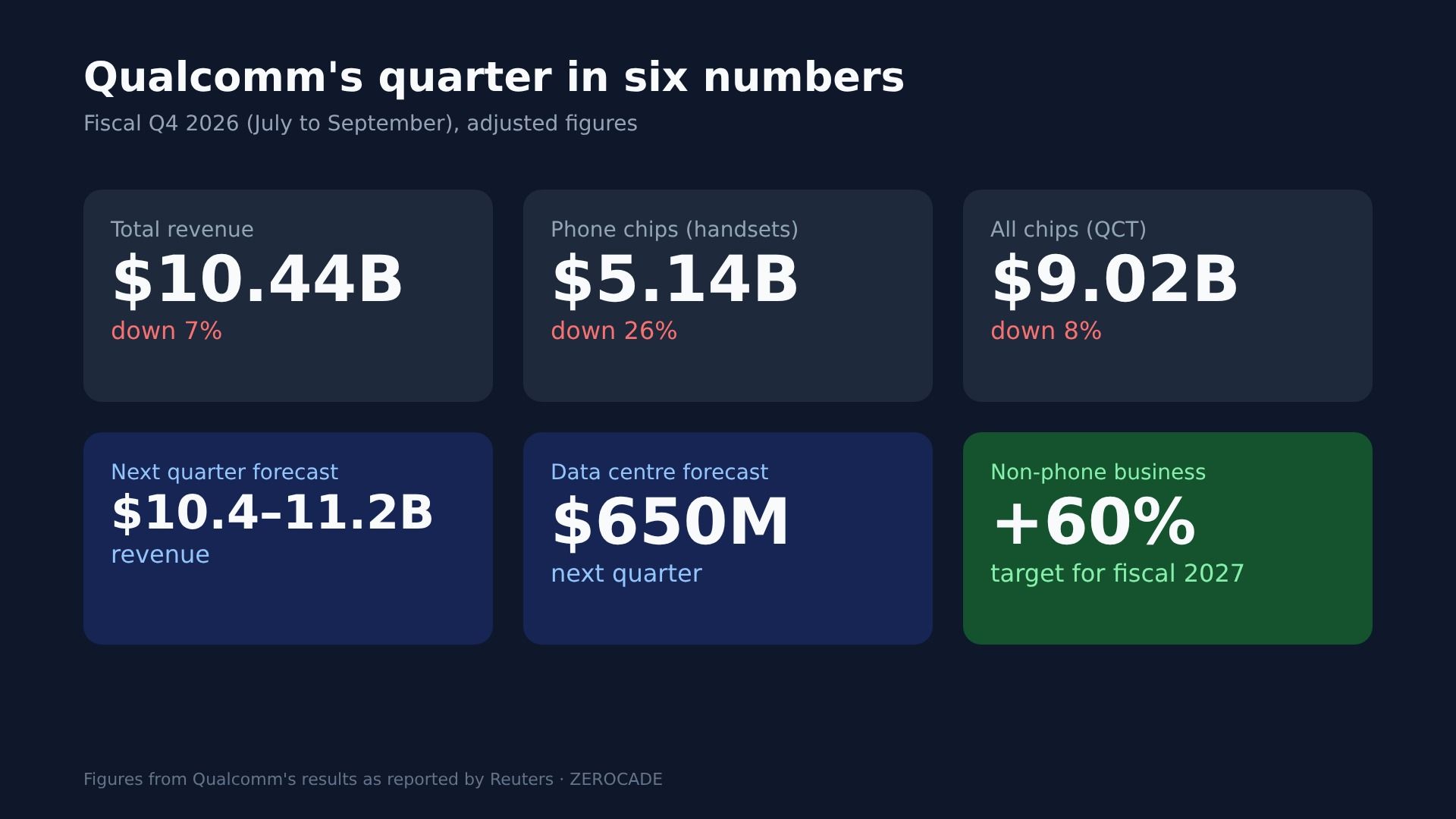
Image: Zerocade
Why phone chips are falling
The short answer is memory. AI servers are buying up huge amounts of memory, which has pushed up the price of the RAM and storage that go into phones. Phone makers have responded by raising prices and shipping fewer phones. Counterpoint says global smartphone shipments fell 20% in the September quarter, to a 14-year low.
India is feeling it too. Shipments here recently hit a decade low as prices climbed.
Analyst Anshel Sag of Moor Insights & Strategy told Reuters the 26% handset drop was the main reason the stock fell, given how big that business still is for Qualcomm.
Who's winning the phone chip race
Counterpoint's numbers show who sold the chips inside the phones that did ship:
| Chipmaker | Share, Q3 2026 | Change from Q3 2025 |
|---|---|---|
| MediaTek | 28% | Down 6 points |
| Qualcomm | 22% | Down 3 points |
| Apple | 21% | Up 4 points |
| UNISOC | 13% | Down 1 point |
| Samsung | 8% | Up 2 points |
| Others | 8% | Up 4 points |
Apple and Samsung were the only big names to gain share. Apple sells mostly expensive phones, and buyers at the top end have been less affected by price rises than budget buyers. Samsung's gain likely reflects more of its own Exynos chips in Galaxy phones.
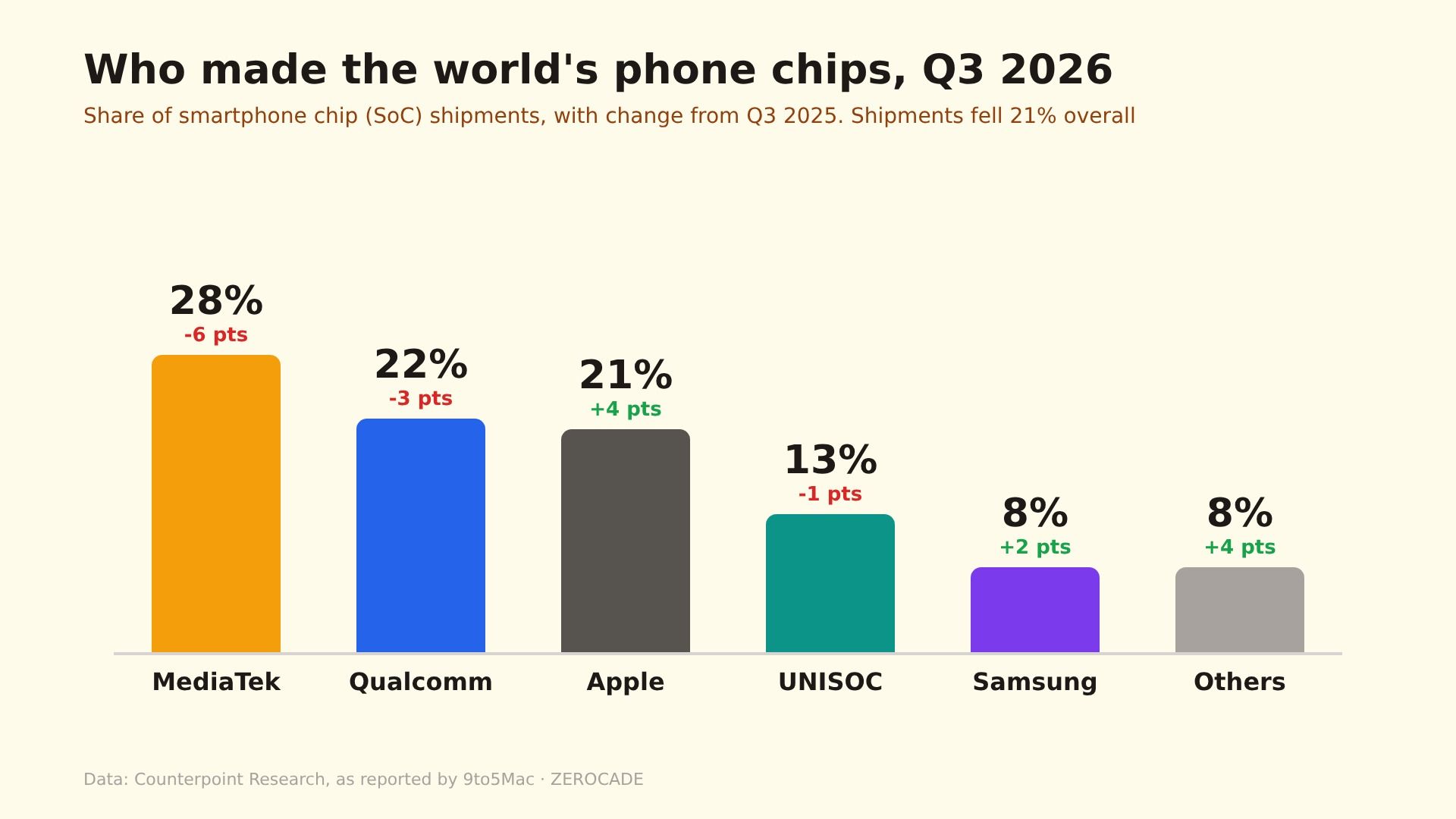
Image: Zerocade
Counterpoint senior analyst Shivani Parashar pointed to three flagship chips launched in September, all built on TSMC's 2nm process: Apple's A20 series, MediaTek's Dimensity 9600 Pro and Qualcomm's Snapdragon 8 Elite Gen 6 series. She expects them to lift premium chip shipments in the October to December quarter, though volumes should still trail last year. Counterpoint forecasts a 20% fall in smartphone chip shipments for 2026 and another 3% to 4% drop in 2027.
What Amon said
Amon struck an upbeat tone. He told Reuters that Android phone sales "had bottomed out" and are "ticking upward again", and that Qualcomm "called this memory thing early" and prepared for it.
The bigger shift is Apple. Apple has started using its own modems in iPhones, and Qualcomm's forecast now leaves Apple out entirely. Amon says the company expects its non-phone businesses, like cars, PCs, smart devices and data centres, to replace that revenue, with 60% growth in those areas in fiscal 2027.
What it means for phones in India
Snapdragon phones aren't going away. The Snapdragon 8 Elite Gen 6 and its faster Extreme version are in this season's big Android launches, including the iQOO 16, which is tipped for India in December.
What these numbers do suggest is that phone prices aren't coming down soon. Memory costs are still rising, and Counterpoint expects that to continue into 2027. If you're waiting for a flagship to get cheaper, that wait could be long. The next thing to watch is how prices land for the December launches in India, starting with the iQOO 16.
If you want to know what's actually inside these chips, our new phone SoC explainer breaks it down.