
The short version
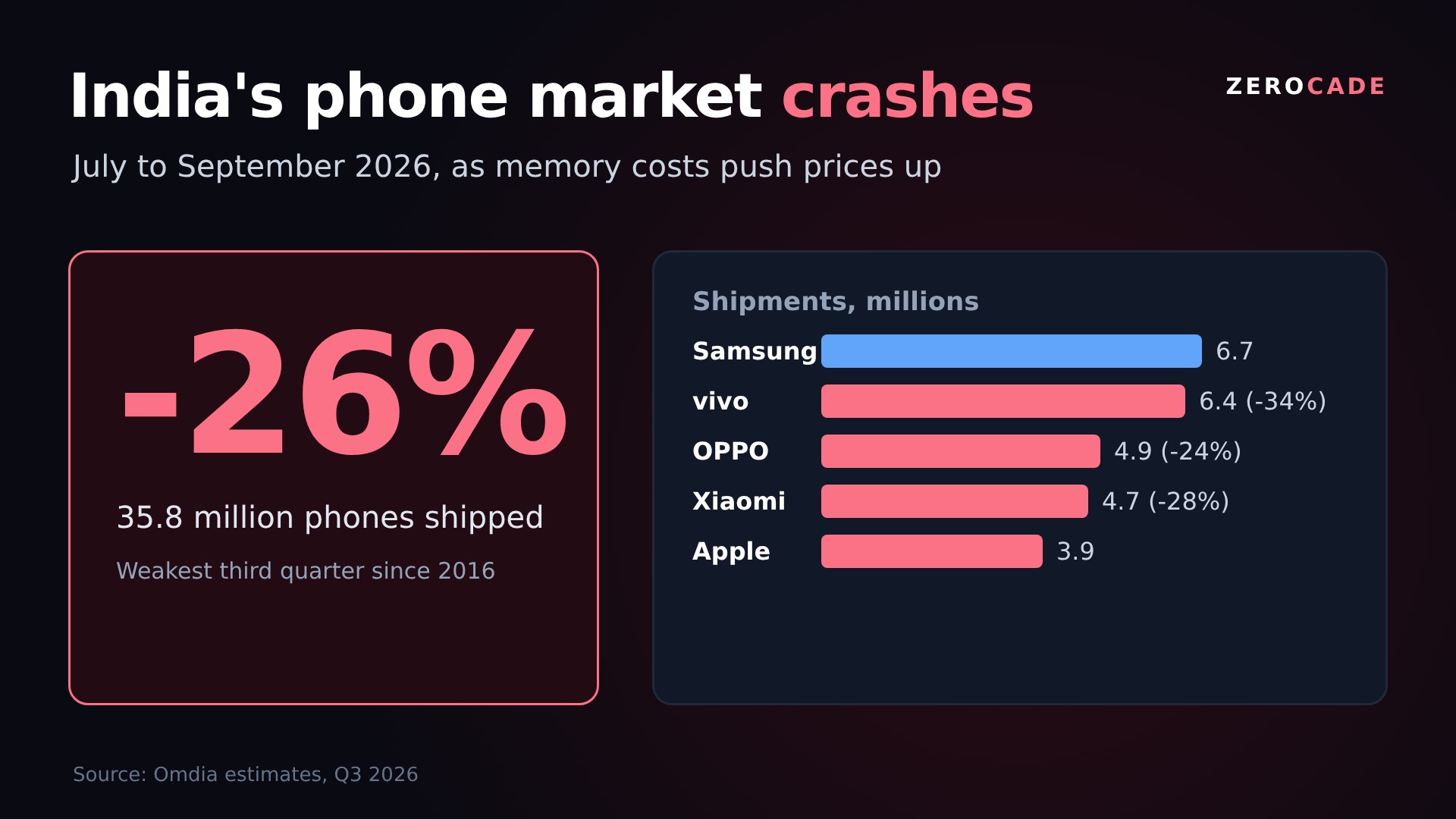
- India's smartphone shipments fell 26% year on year to 35.8 million in July to September, according to research firm Omdia. It's the weakest third quarter since 2016.
- The cause is price. Memory chips cost far more because of AI demand, and phone makers have passed that on to buyers.
- Samsung is No. 1 in India again for the first time since early 2024. vivo fell hardest, down 34%.
- Omdia expects price pressure to last until at least mid-2027, and another small drop in shipments next year.
The top five brands
Omdia's Q3 figures show every big brand shipping less.
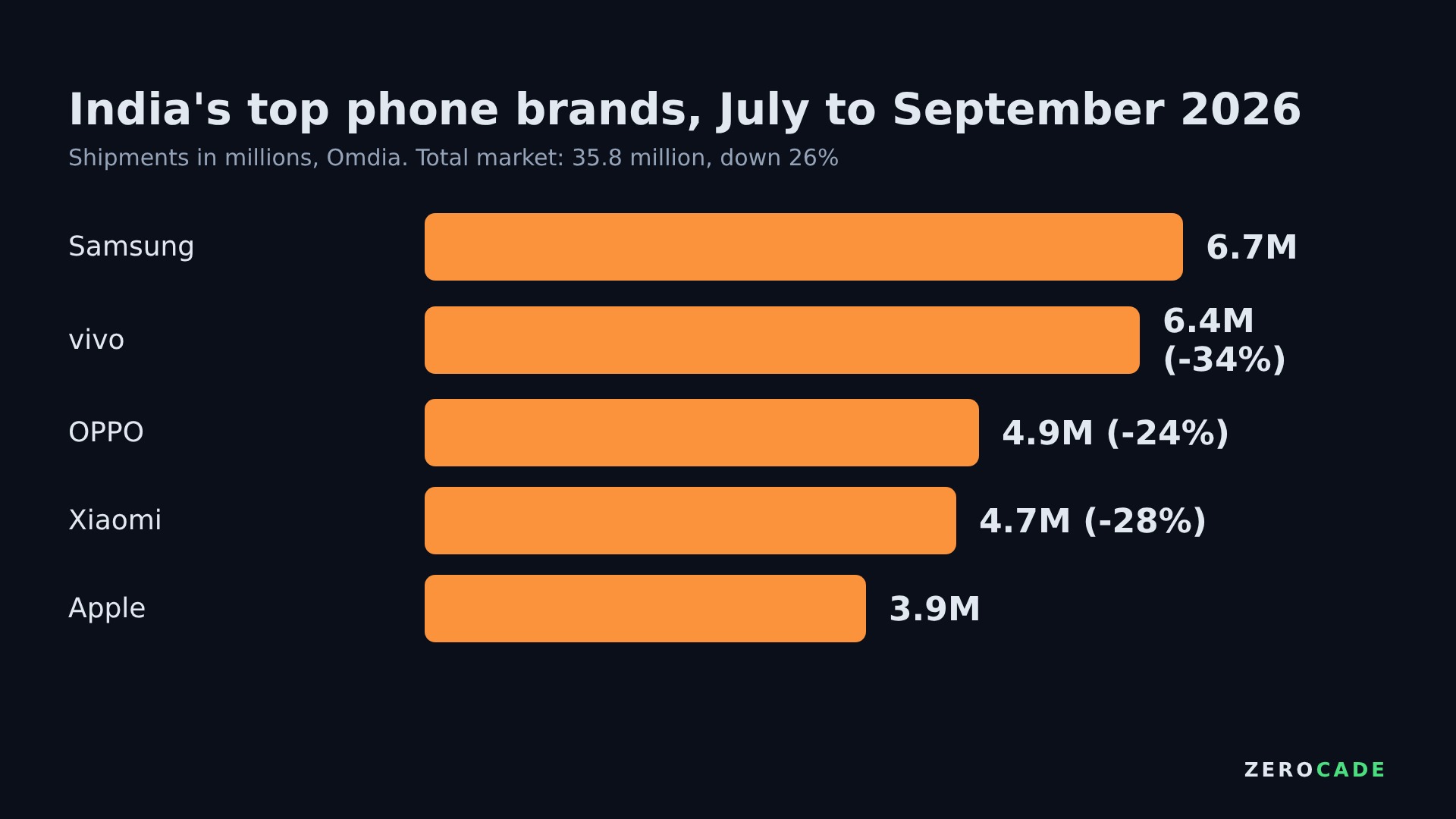 Image: Zerocade
- Samsung: 6.7 million. Its budget Galaxy A07, A17 and A27 did the heavy lifting, with the Galaxy S26 series, S26 FE and Z foldables at the top end. That's roughly 19% of the market.
- vivo: 6.4 million, down 34%. Repeated price increases disrupted retailers' planning, and budget models like the Y11 5G and Y21 5G were in short supply.
- OPPO: 4.9 million, down 24%. Higher prices and cautious stocking by shops hit the A-series, though the Reno 16 series helped.
- Xiaomi: 4.7 million, down 28%. Rising component costs forced it to choose between raising prices and cutting RAM or storage on models like the Redmi 15A and Redmi Note 17.
- Apple: 3.9 million. Shops stocked up on the iPhone 17 and iPhone 16 ahead of expected price rises, and the new Pro models arrived late in the quarter.
Working back from Omdia's percentages, vivo shipped roughly 9.7 million phones in the same quarter last year, OPPO about 6.4 million and Xiaomi about 6.5 million. Those are our calculations, not Omdia's figures, but they show how big the drop is.
Chinese brands together now hold about 68% of the market, down from 75% a year ago.
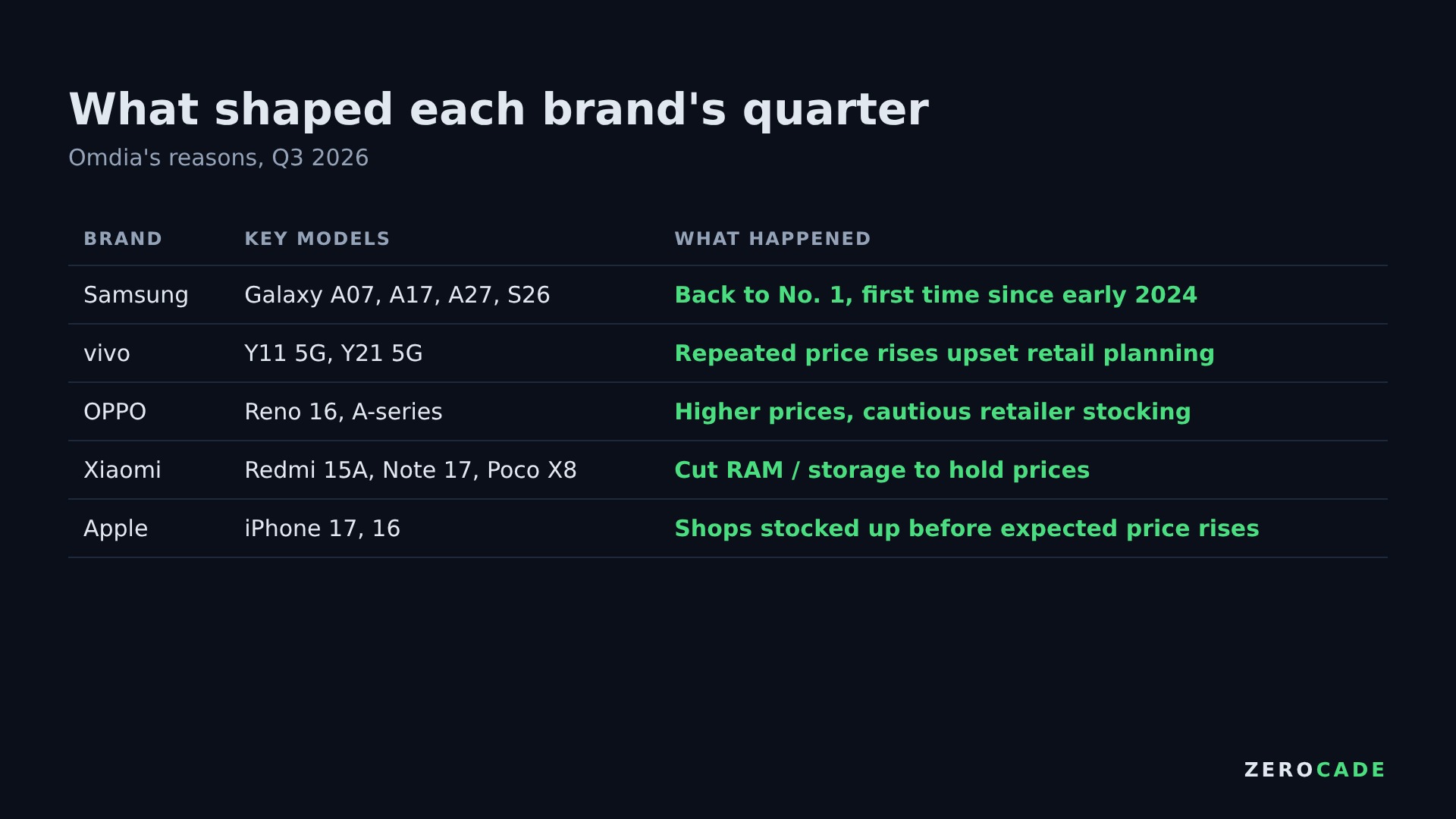 Image: Zerocade
Why phones cost more
The short answer is RAM. AI data centres are buying huge amounts of memory, which has pushed up the price of the chips that phones use too. Brands have had three options, and most have tried all of them:
- Raise prices, which is what hurt vivo and OPPO most.
- Cut specs, shipping budget phones with less RAM or storage at the old price.
- Lean on offers, like cashback, exchange deals and longer EMI plans, which Omdia says kept some upgrades going.
Counterpoint says global phone retail prices are up about 20% this year, and that buyers everywhere are keeping their old phones for longer. Its global figures show shipments down about 20%, which is where many of the "20% crash" headlines come from.
It's the same squeeze hitting PCs and consoles. Our DDR4 vs DDR5 explainer covers why memory got so expensive, and it's a big reason the PS6 could cost over $1,000.
Why the festive season didn't save it
Diwali came later this year, so a lot of the offline stock-building that normally happens in September moved into October, outside this quarter. Omdia principal analyst Sanyam Chaurasia said the market is shifting away from online-led festive volume towards "more selective, channel-driven growth". In plain terms: fewer huge online sale spikes, more buying through local shops and planned upgrades.
So some of this drop should show up as a better October. But a later Diwali can't explain a 26% fall on its own.
What happens next
Omdia expects pricing pressure to last at least until mid-2027, and another low-single-digit drop in shipments next year. One hopeful note from Digit's coverage: nearly four in ten Indian buyers surveyed said they would consider paying more for useful AI features, which brands will lean on to justify higher prices.
On paper, that means fewer deep discounts on budget phones for a while. If you're planning to upgrade, a phone launched before the price rises may be better value than a brand-new model with trimmed RAM. Check the RAM and storage on any "new" variant against the older one before you buy.
What to watch: October–December numbers, which will show how much the late Diwali helped, and further price changes from vivo and Xiaomi, the two brands hit hardest.