

The short version
- Every Xbox game has to run on both the Series X and the cheaper Series S, and with the same features. That's Microsoft's parity rule.
- The Series S has about a third of the Series X's graphics power and 10GB of memory against 16GB. Developers say the memory is the bigger problem.
- Games from Black Myth: Wukong to No Rest for the Wicked have been delayed on Xbox, and others ship with cut-down Series S versions.
- In India the Series S lists at ₹34,990, making it the cheapest way into current-gen gaming, which is exactly why Microsoft protects it.
Why this came up
At the Console Game Developers Conference in Seoul on November 9, former Tekken boss Katsuhiro Harada, now head of SNK's VS Studio, said he wished hardware like the Series S hadn't been released. In Inven Global's translation, he called it a console "so similar to Series X while having awkwardly lower performance", and said making a Series S version is "extra work for a slightly weaker child".
He also joked that he's worried Microsoft will make a "Helix S" for its next console. He said this with a senior Xbox staffer in the audience.
Not everyone on stage agreed. CD Projekt Red's Paweł Sasko said the Series S forces his team to optimise their code cleanly, which helps every version. The debate is a good way into one of the biggest quiet forces in game development: the weakest console.

Image: Microsoft
How the Series S compares
The Series S launched in 2020 at $299, aimed at 1440p at 60fps. It shares the same CPU design as the Series X, but its graphics chip and memory are much smaller:
| Xbox Series S | PS5 | Xbox Series X | |
|---|---|---|---|
| Graphics power | 4 TFLOPS, 20 compute units | 10.28 TFLOPS, 36 units | 12.15 TFLOPS, 52 units |
| Memory | 10GB (8GB fast, 2GB slow) | 16GB | 16GB (10GB fast, 6GB slower) |
| Storage | 512GB | 825GB (launch model) | 1TB |
| India price | ₹34,990 | ₹69,990 (disc) | ₹55,990 |
| US price now | $499.99 | $649.99 (disc) | $799.99 |
Indian prices are the last official list prices; Microsoft raised US prices again in August and hasn't announced new Indian ones, so check before you buy.
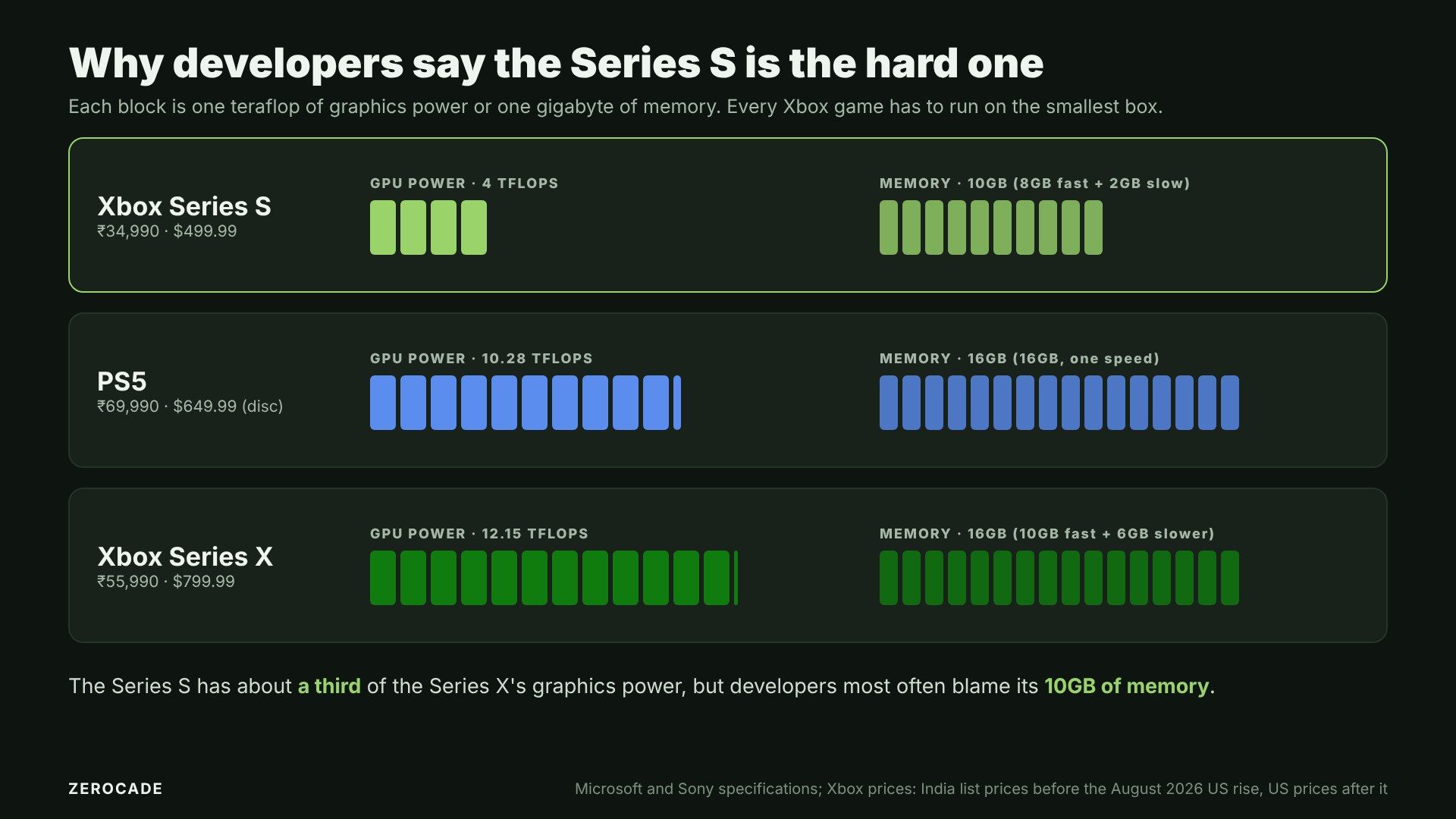
Image: Zerocade
Why memory is the real problem
Lowering resolution is the easy fix for weaker graphics: render at 1080p instead of 4K, and most of the problem goes away. Memory is harder. A game's world, textures, characters and code all need to fit, and you can't just shrink them without changing how the game streams its levels.
That's why developers keep pointing at the 10GB:
- Black Myth: Wukong came to Xbox in August 2025, a year after PS5. Its director said the Series S's 10GB of shared memory was very hard to fit without years of optimisation.
- Assassin's Creed Shadows had ray-traced lighting running on Series S, but Ubisoft cut it outside the hideout because it ran short on memory.
- 007 First Light targets 60fps on every console except the Series S, which only gets a 30fps mode at launch. IO Interactive blamed memory and graphics headroom.
- No Rest for the Wicked reaches 1.0 on PC and PS5 first. Its director said the Series S was "making that rough".
Microsoft has helped where it can. In 2022 it freed up "hundreds of additional megabytes" of memory for Series S developers.
How the parity rule works
Microsoft requires Xbox games to launch on both consoles with the same features. Resolution and frame rate can differ, but a mode or feature can't exist on the Series X and be missing on the S.
The best-known clash was Baldur's Gate 3. Larian couldn't get split-screen co-op working on the Series S, which held up the Xbox version. In August 2023, Microsoft let it launch with split-screen on Series X only, and the feature reached Series S later in a 2025 patch.
Phil Spencer defended the rule in January 2025, saying targeting the Series S was "a real advantage" with handheld PCs and Switch 2 on the way. Spencer retired in February 2026, and his successor hasn't said anything publicly about changing it.
What a "lead platform" is
Most multi-platform games are built around one main version, the lead platform, and then adapted for the others. The weakest machine usually sets the limits for things that are hard to scale, like memory budgets, world size or how many characters are on screen.
It's not a new problem:
- PS3 era: Bayonetta's PS3 port, built from the Xbox 360 lead version by another studio, was later called PlatinumGames' "biggest failure" by producer Atsushi Inaba.
- Switch "impossible ports": The Witcher 3 ran on Switch in 2019 at 540p handheld and 720p docked, a huge cut from other consoles.
- Today: Switch 2 is now the weakest current console, and some developers, like CD Projekt, say lessons from optimising for it fed back into other versions.
There is a real upside. Warhorse said its Series S work on Kingdom Come: Deliverance 2 "helped greatly the other platforms as well". On paper, a weak target forces efficient code, which can mean smoother performance everywhere.
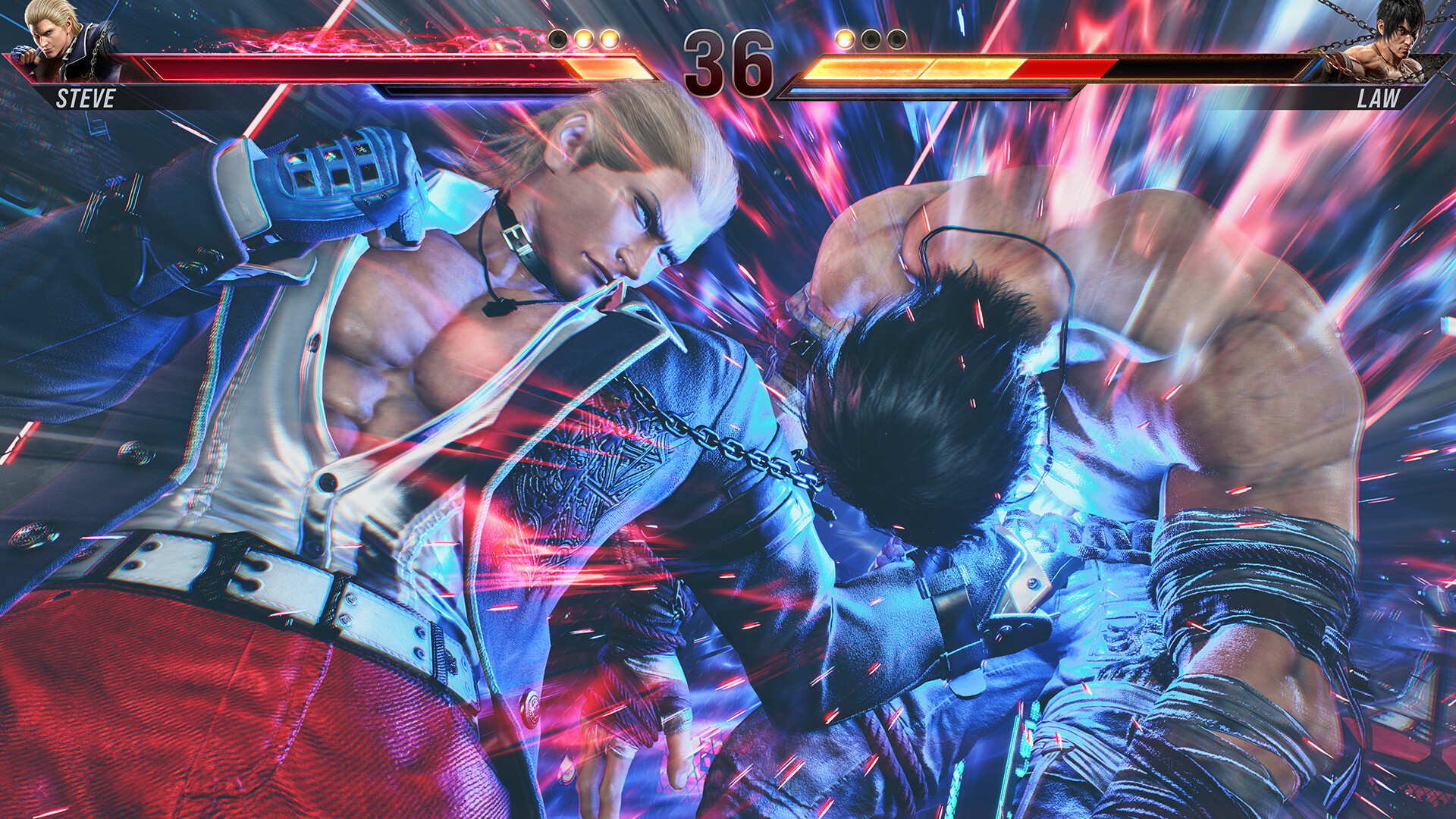
Image: Bandai Namco
Why it matters for the next generation
The same question is coming back. Microsoft has said its next console, Project Helix, uses a custom AMD chip, with developer hardware arriving in 2027. There's no official "Helix S", but Microsoft has talked about a family of Xbox devices, and that could include something smaller.
Sony is rumoured to be making a PS6 handheld, codenamed "Canis", with roughly half a PS5's graphics power. That's a leak, not an announcement, but if it's true, it would become the next weakest target developers have to plan around. We covered the PS6 handheld report last month.
What to watch
Watch whether Microsoft keeps the parity rule for Project Helix and any cheaper model, and how many 2027 games launch late on Xbox. If you're buying a Series S in India, check whether the games you want have full Series S versions first. Digital Foundry's comparisons are the best place to see what each version actually cuts.